Solace
User-Centered Sensory Spaces for Autism.
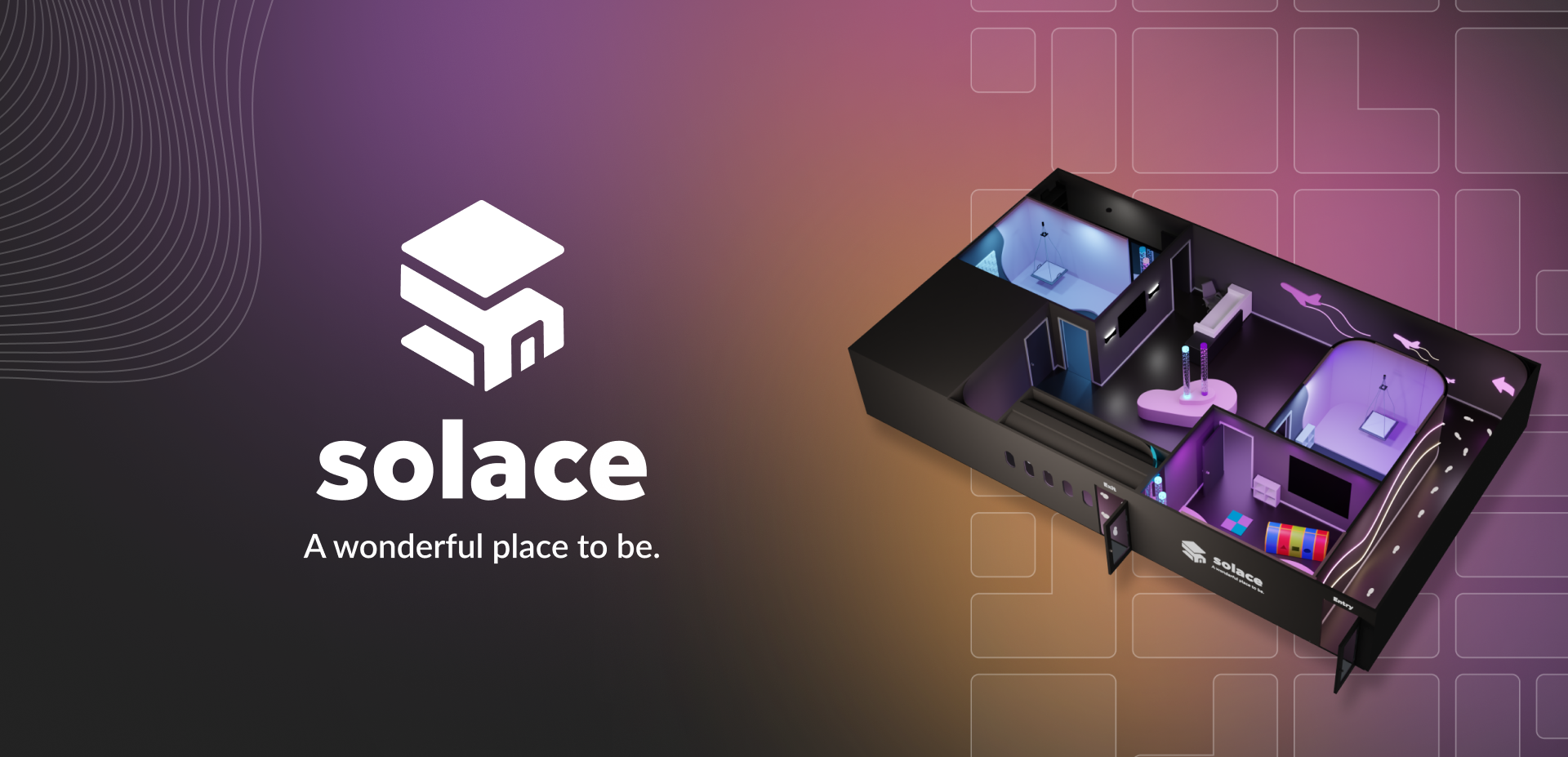
At a Glance
Impact at a Glance
Gold Indigo Design Awards , the highest honor in the competition
Silver Indigo Design Awards across multiple project categories
Bronze Indigo Design Awards recognizing depth and breadth of the system
Weeks of development , from research and ideation through physical prototype and final submission
The Problem
Public spaces are difficult for those with autism because of social stigma, neurotypical standards, and lack of accommodations , leaving them without a safe space that considers their individual sensory needs.
The Solution
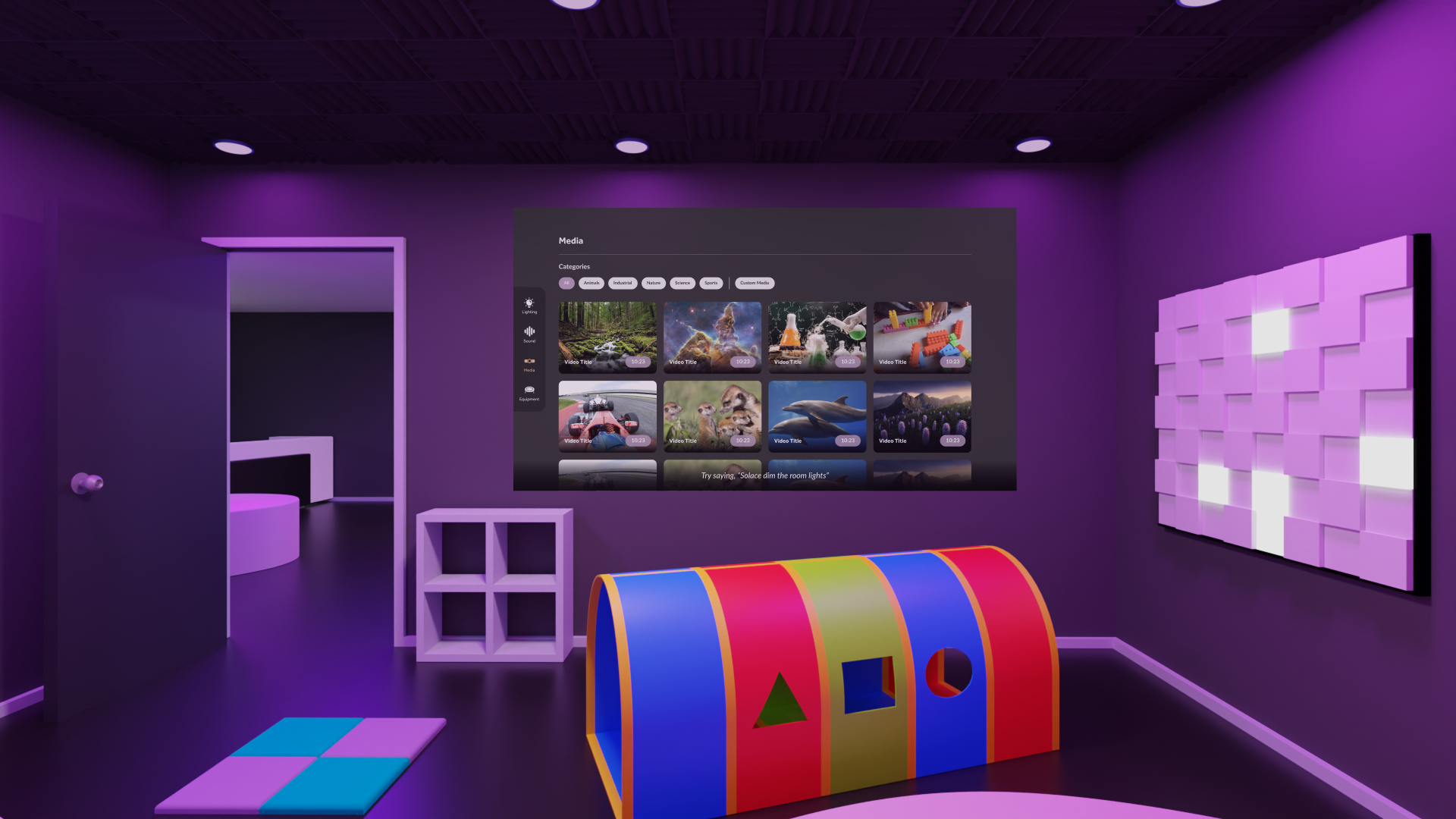
Solace is a subscription-based service of private sensory spaces in public areas, where autistic individuals of any age can schedule a personalized experience with curated activities to accommodate their sensory needs.
How might we create an impactful public sensory room experience by providing structure through scheduling, planned active or calming activities, and addressing each individual's sensory needs?
Target Users
Youth with ASD
Providing more structure and an individualized approach based on each child's specific sensory profile.
Adults with ASD
Providing adults with more resources for sensory relief , a group that often faces diminishing support systems after aging out of youth services.
Secondary Research
Autism as an Emerging Public Health Problem
Since 1990, the number of children classified as autistic by state education departments across the U.S. has increased approximately 25% per year. Individuals referred to as "high functioning" are currently the fastest growing sector of the autistic population. (Newschaffer & Curran, Public Health Reports, 2003; Pinder-Amaker, Harvard Review of Psychiatry, 2014)
Social Exclusion and the Autistic Experience
Research confirms that autistic individuals are disadvantaged not by their underlying impairment, but by social conditions. They are subject to restrictions on using public spaces , and members of the autistic community reported feeling relief when in spaces where they could be themselves, free from managing stigma. (Bumiller, 2008; Ahlquist et al., 2017)
| Factor | Finding |
|---|---|
| Cognitive | About 2/3 of individuals with ASD are cognitively impaired, while approximately 50% fall in the above-average range on intelligence tests , revealing the wide spectrum of need. |
| Physical | Children who experience limitations in motor skills have fewer opportunities for social interaction with peers, correlating with lower levels of physical activity overall. |
| Cultural | Those with ASD lack access to services that support their rights in health, education, employment, and community living. 40% of autistic adults who work part-time want to work more hours. |
| Social | The autistic community is approximately 50% less likely to be invited to social activities, and 450% less likely to see friends without speech, language, or learning differences. |
| Emotional | Many autistic people feel emotion 200%–400% more intensely than neurotypical individuals, making unregulated sensory environments especially overwhelming. |
The System , 5 Components of Solace
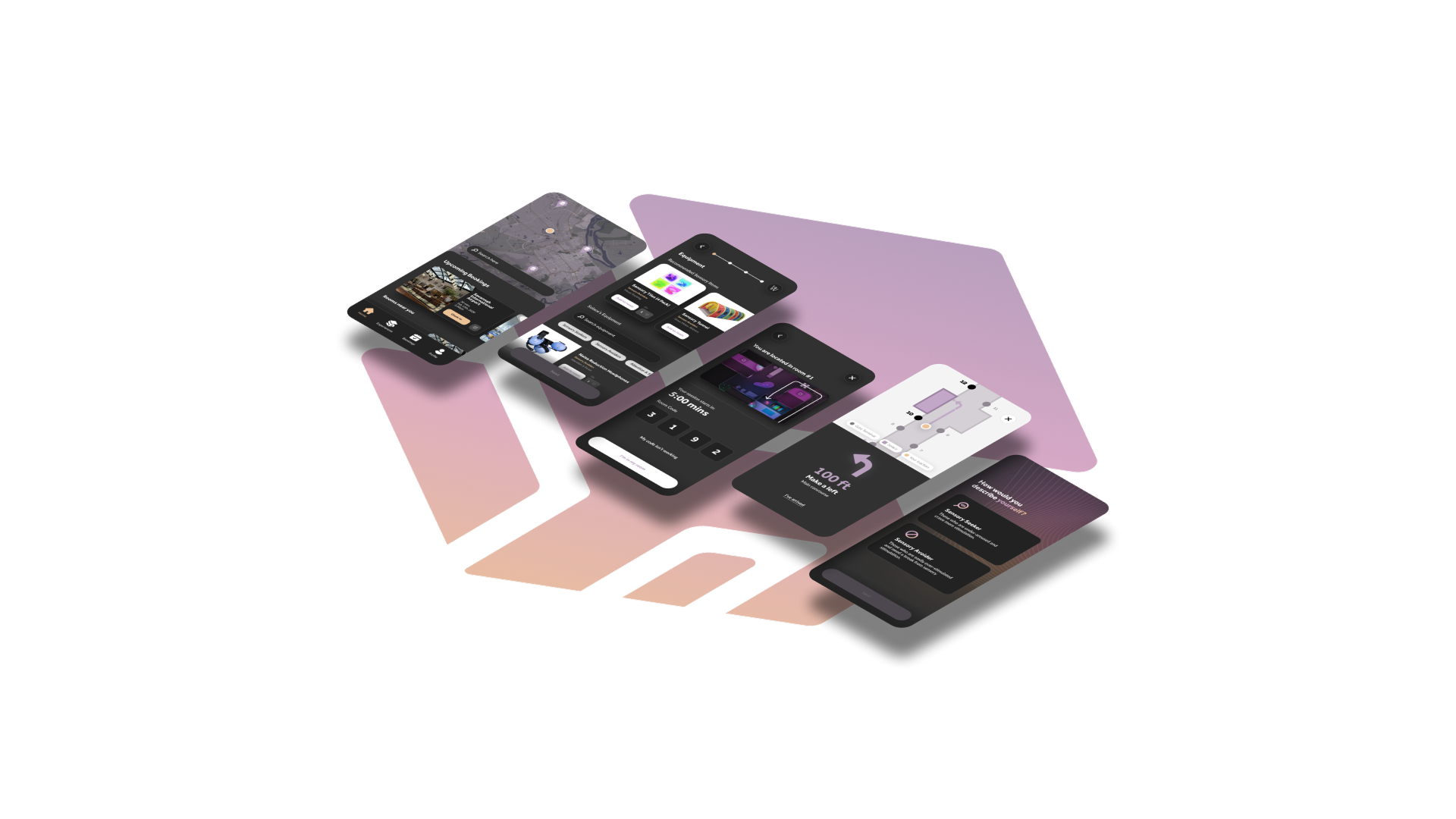
Mobile Application
Where users can schedule a visit at one of our locations and customize their desired sensory experience.
The Space
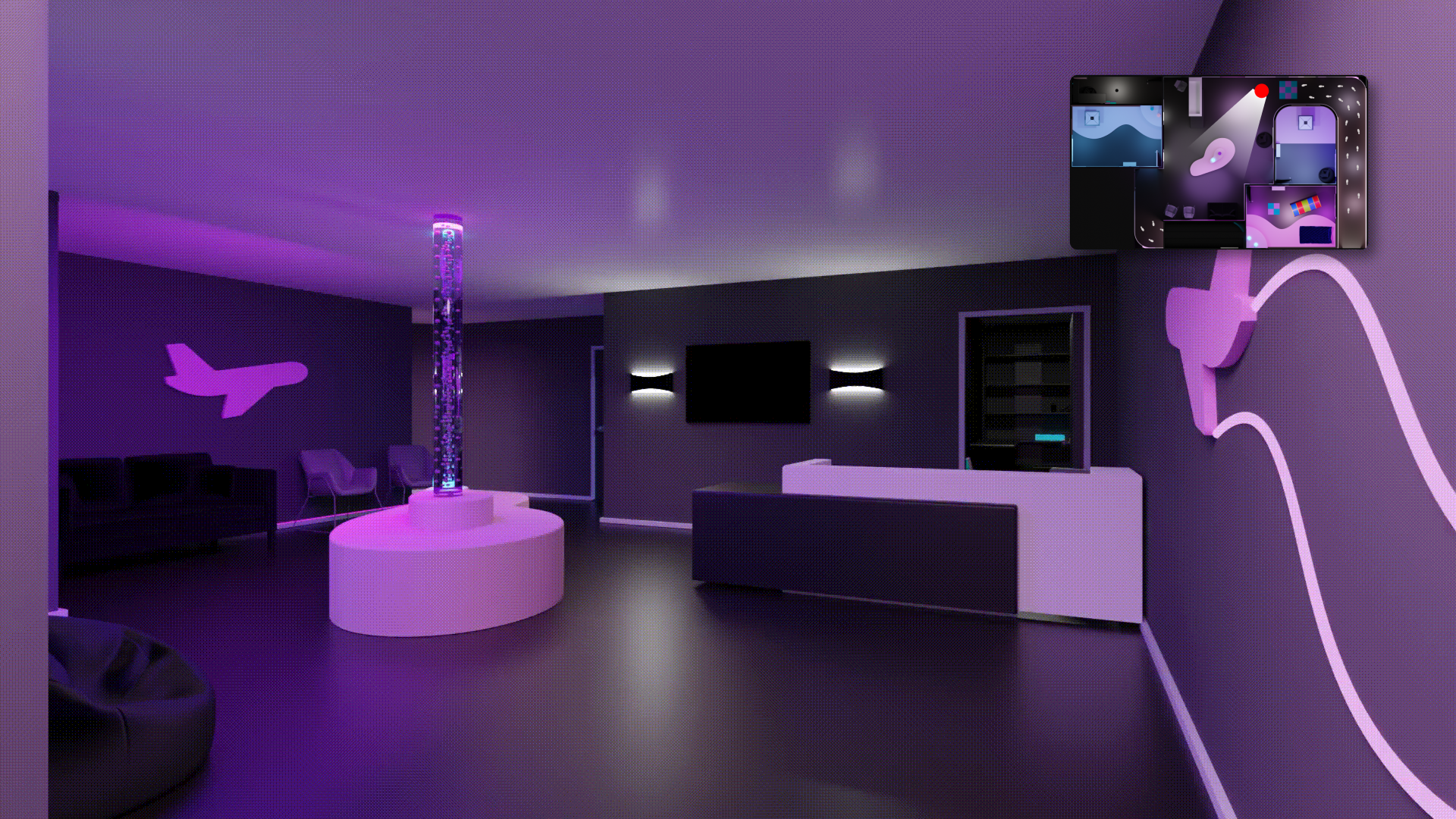
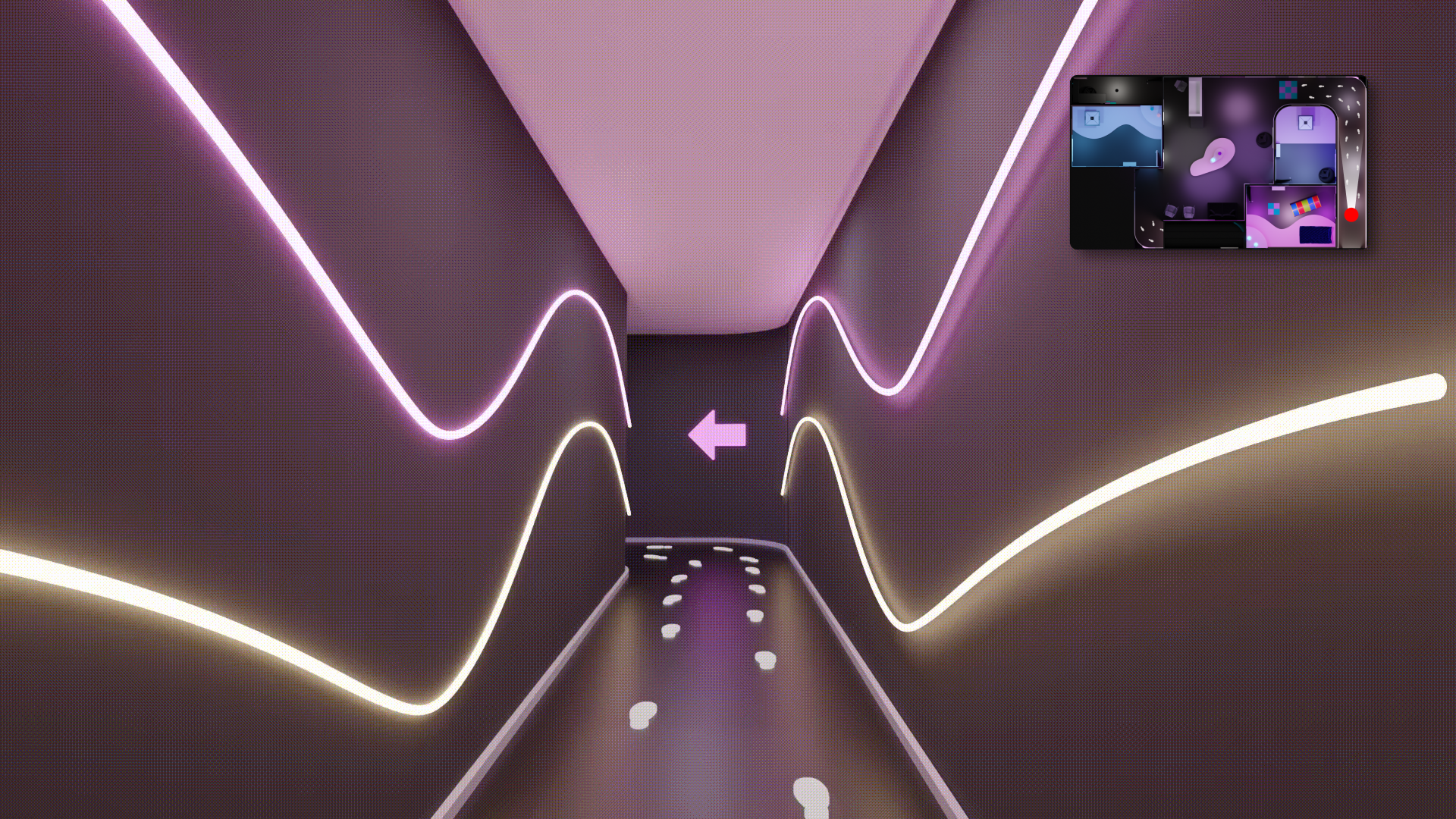
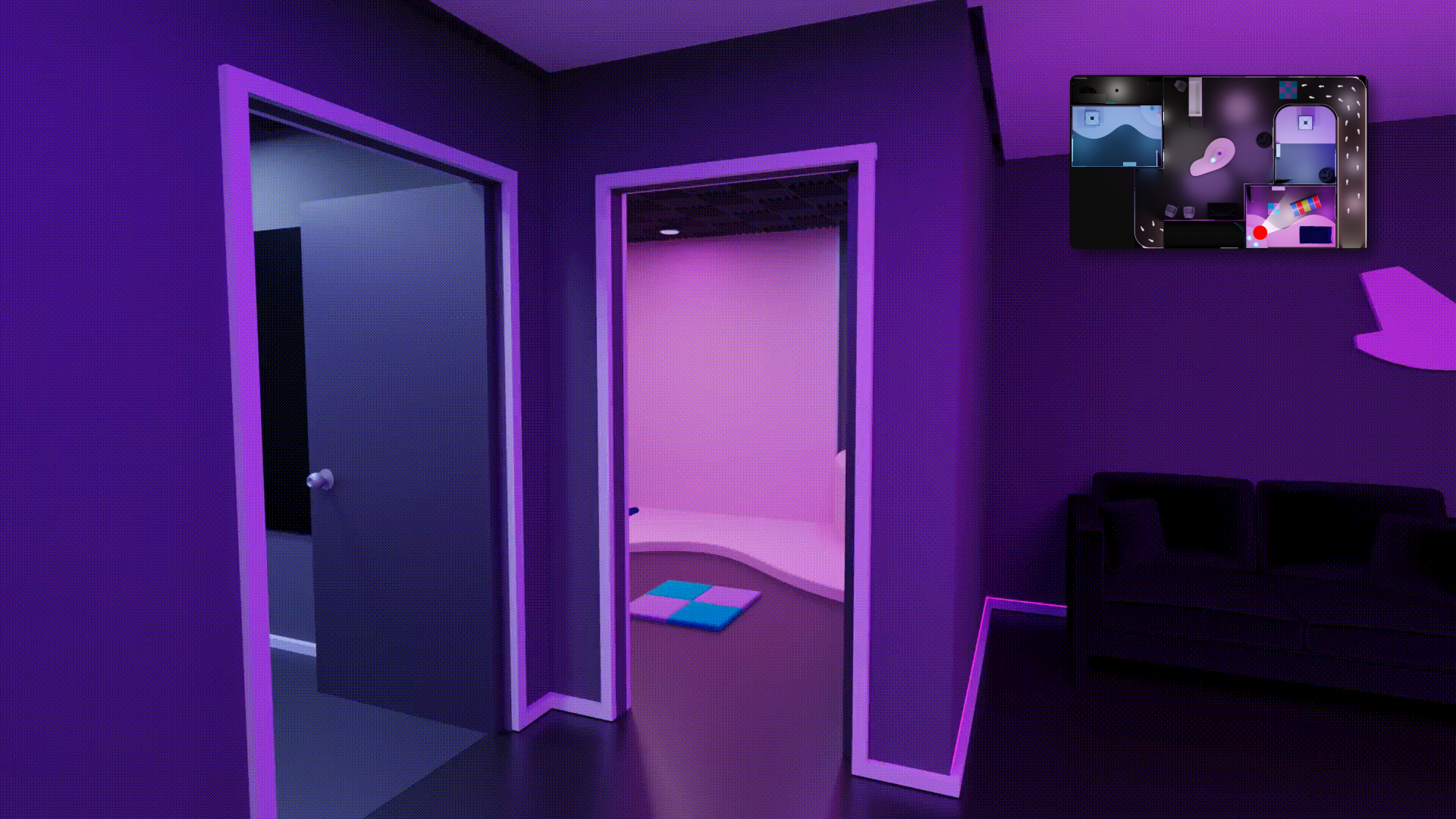
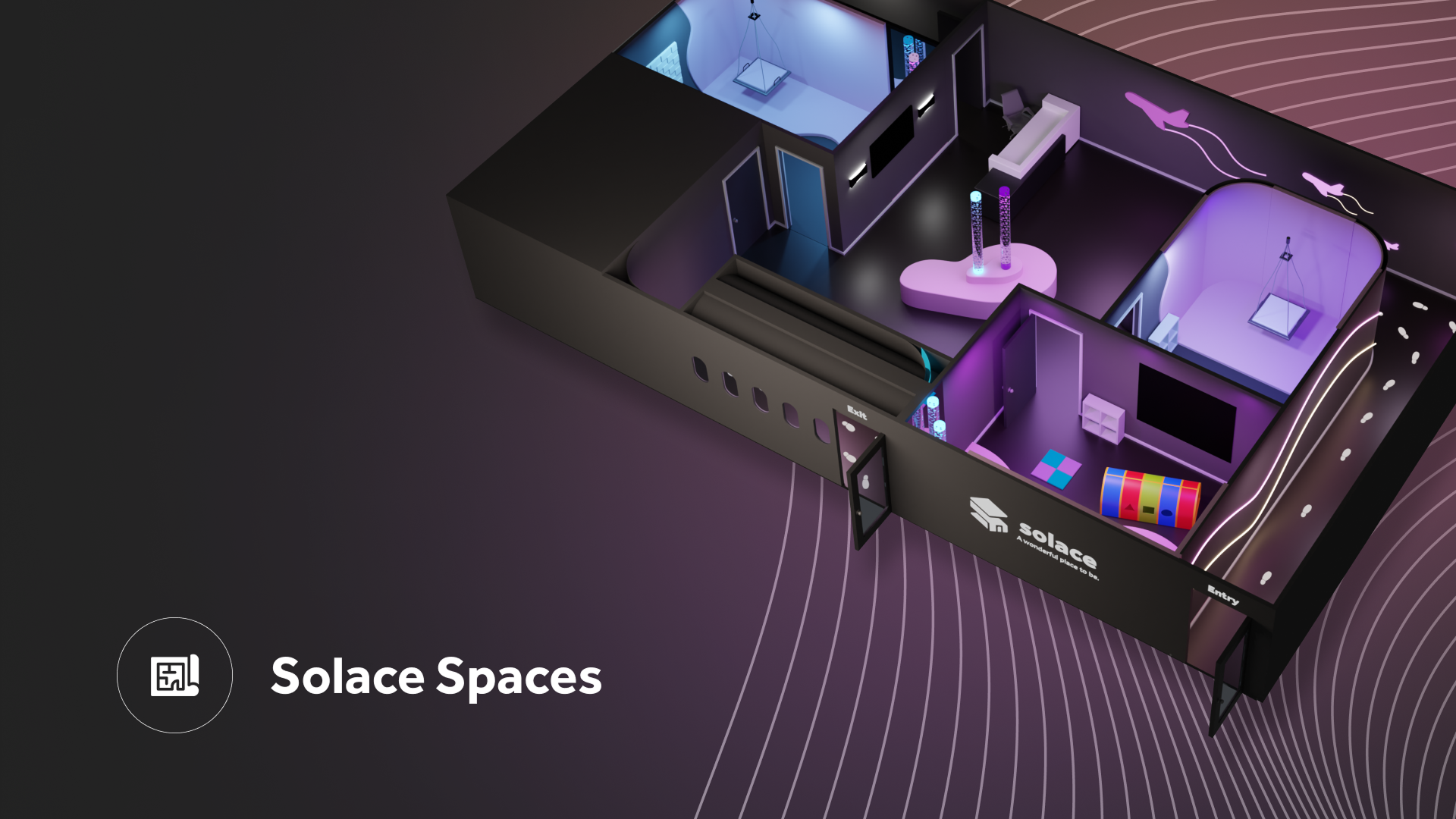
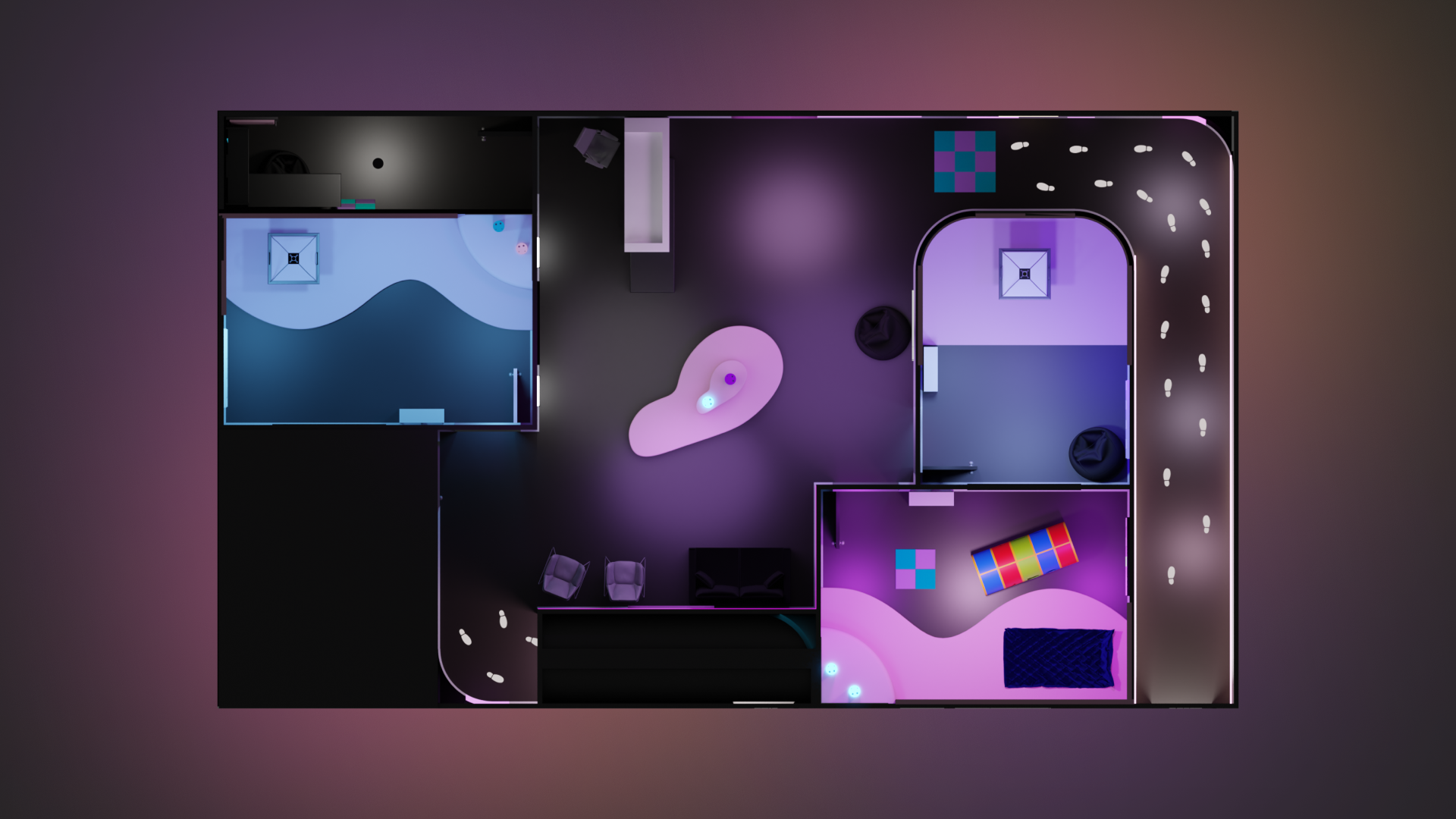
Located in airports, malls, arenas, and stadiums , up to five individual rooms that users can reserve for 15–30 minute periods.
Solace Projector
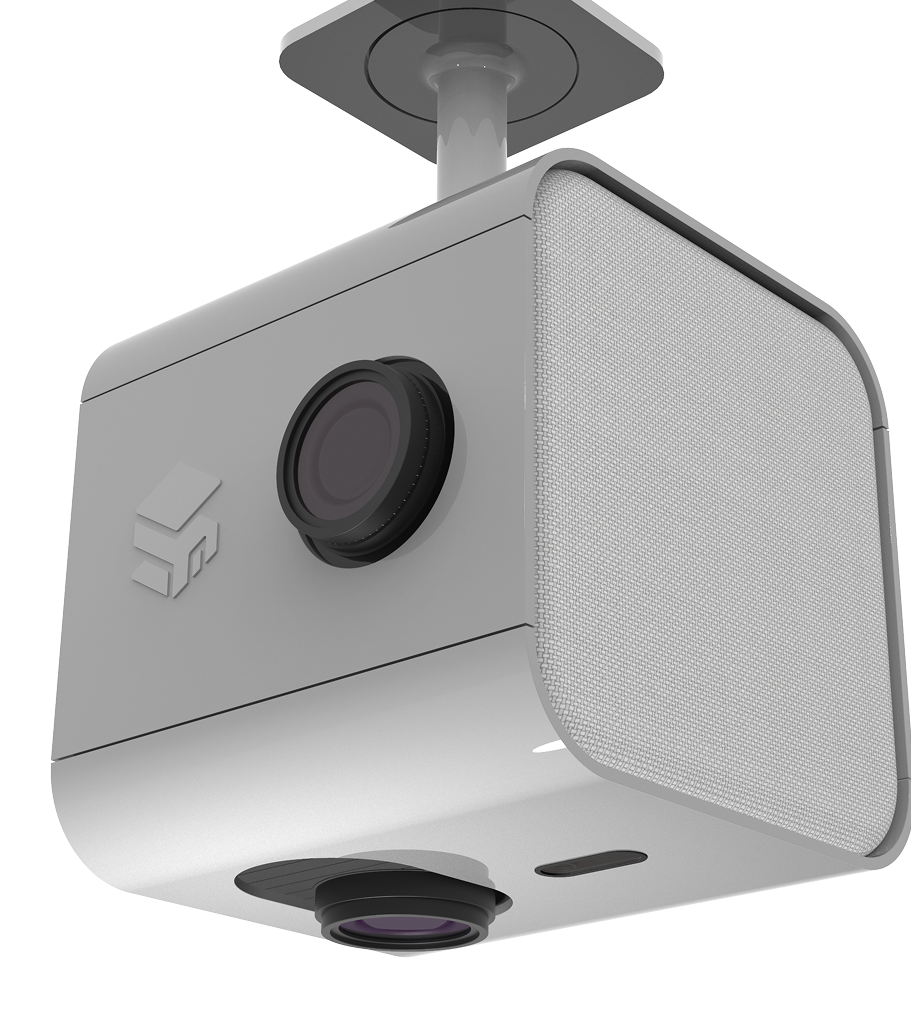
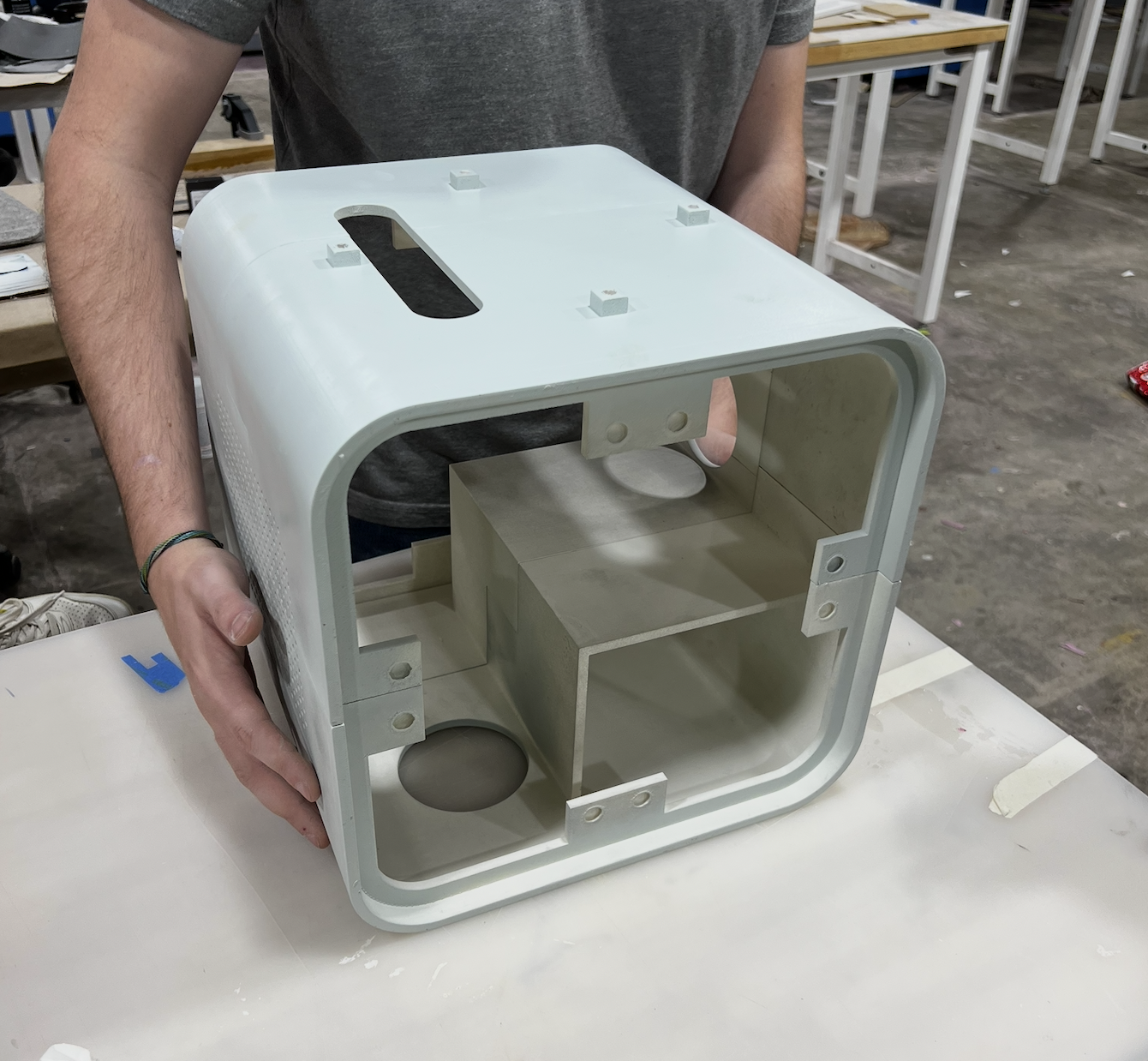
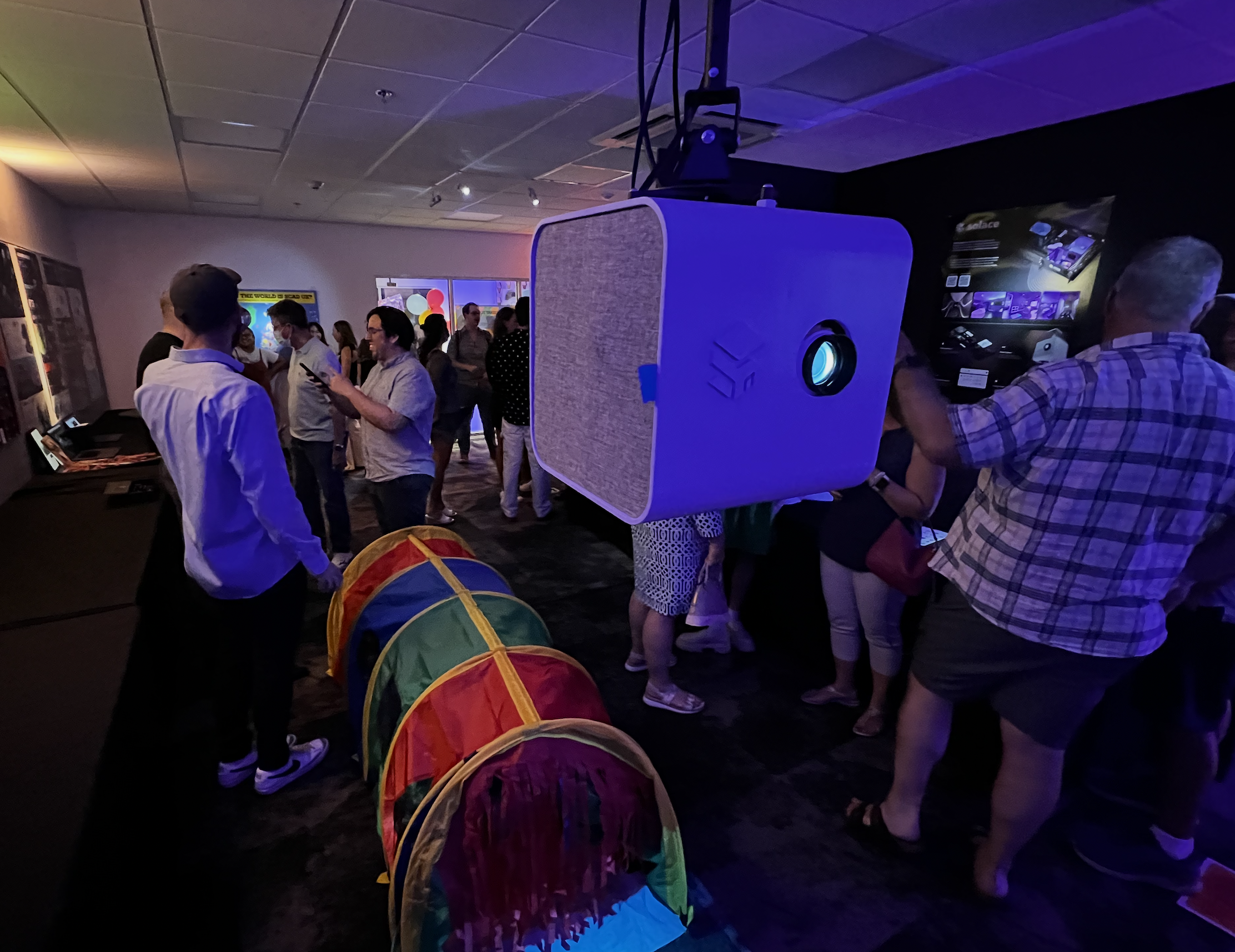
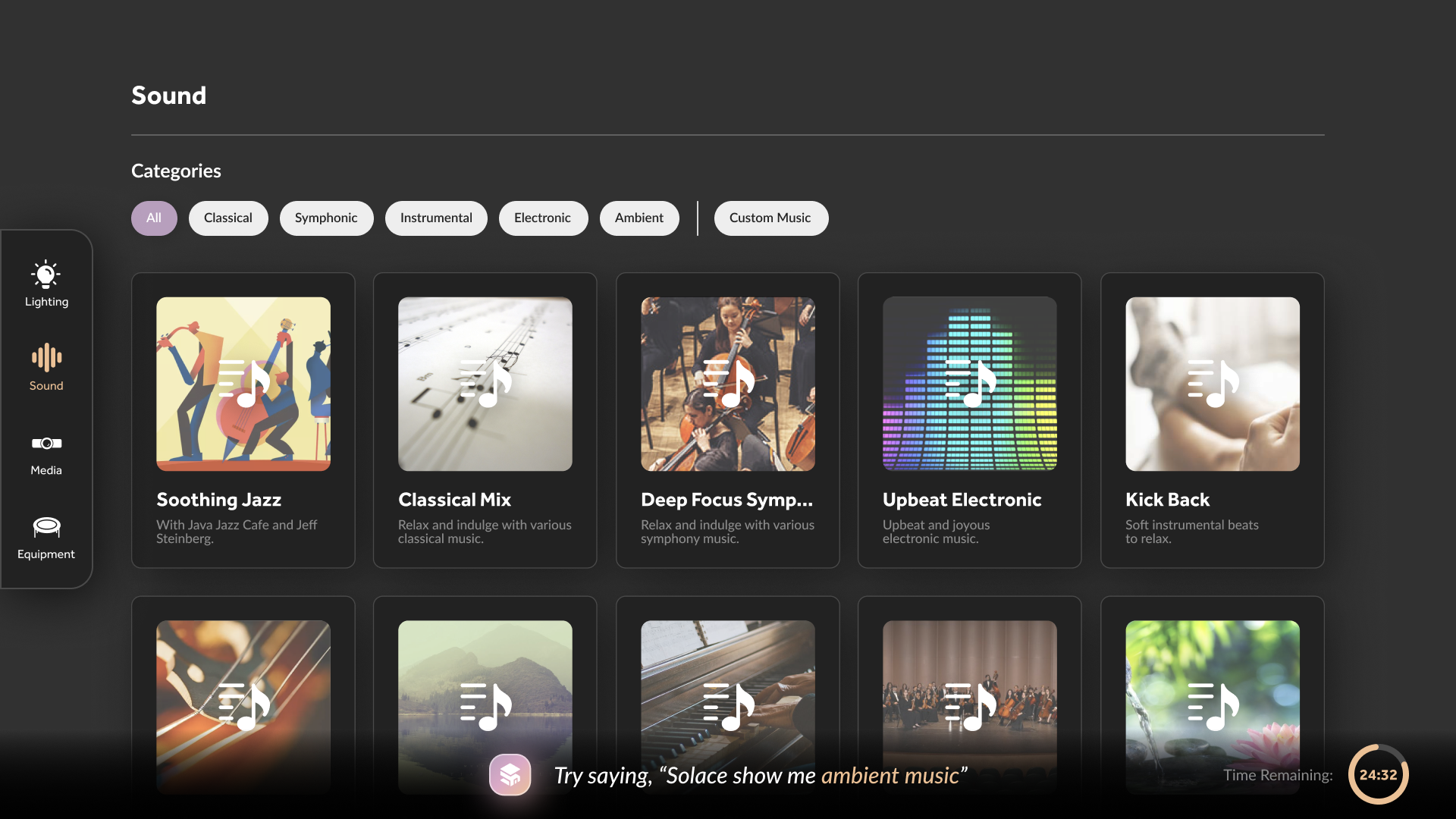
A dual projector that can display interfaces on both the wall and floor, housing the built-in voice assistant. The Solace voice assistant works in tandem with the projector to help customers control lighting, media, sound, and equipment.
Voice Assistant
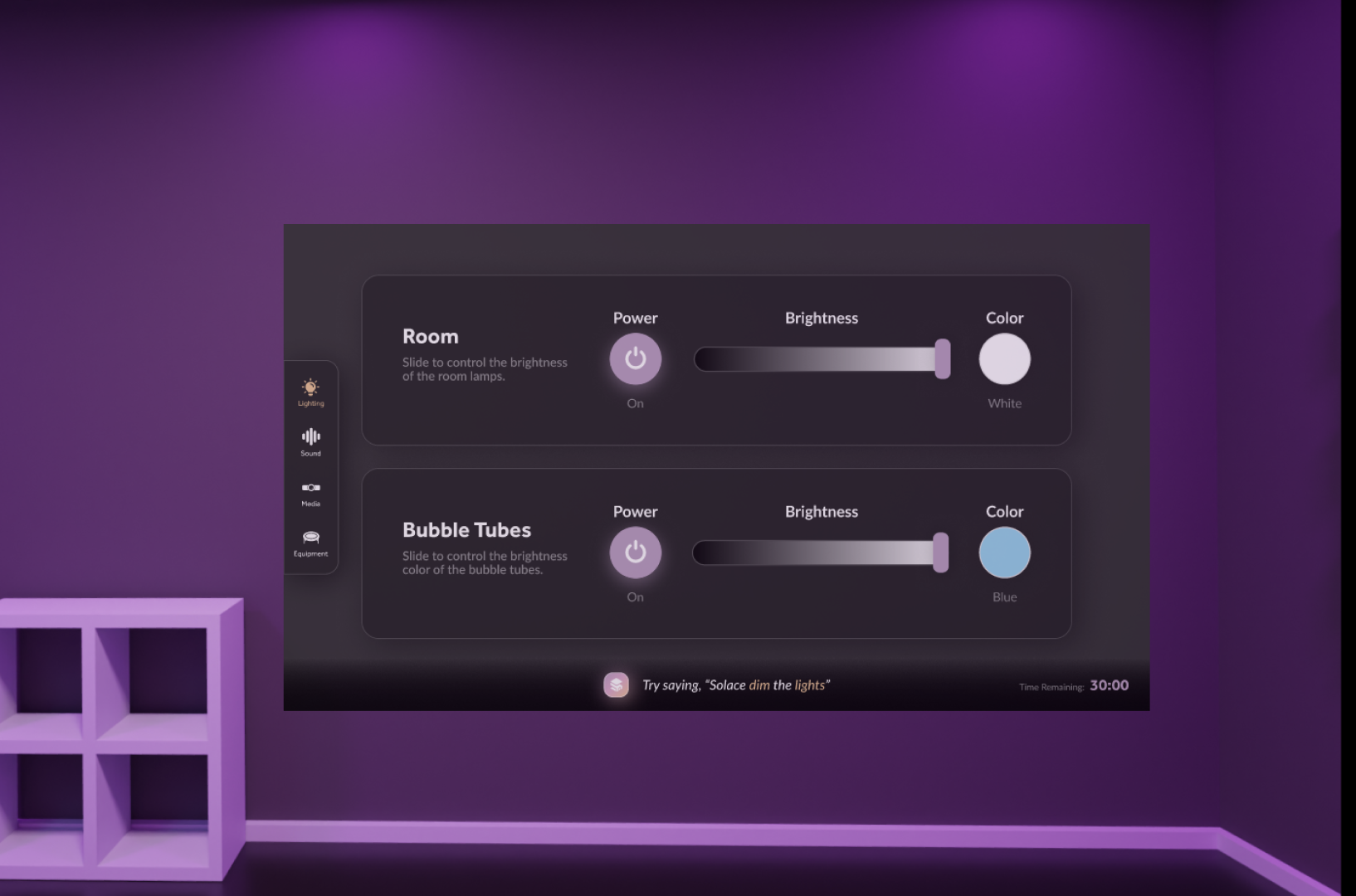
The Solace voice assistant works in tandem with the projector to assist customers with controlling the lighting, media, sound, and equipment in their room.
Non-Verbal Accessibility (AAC Library)
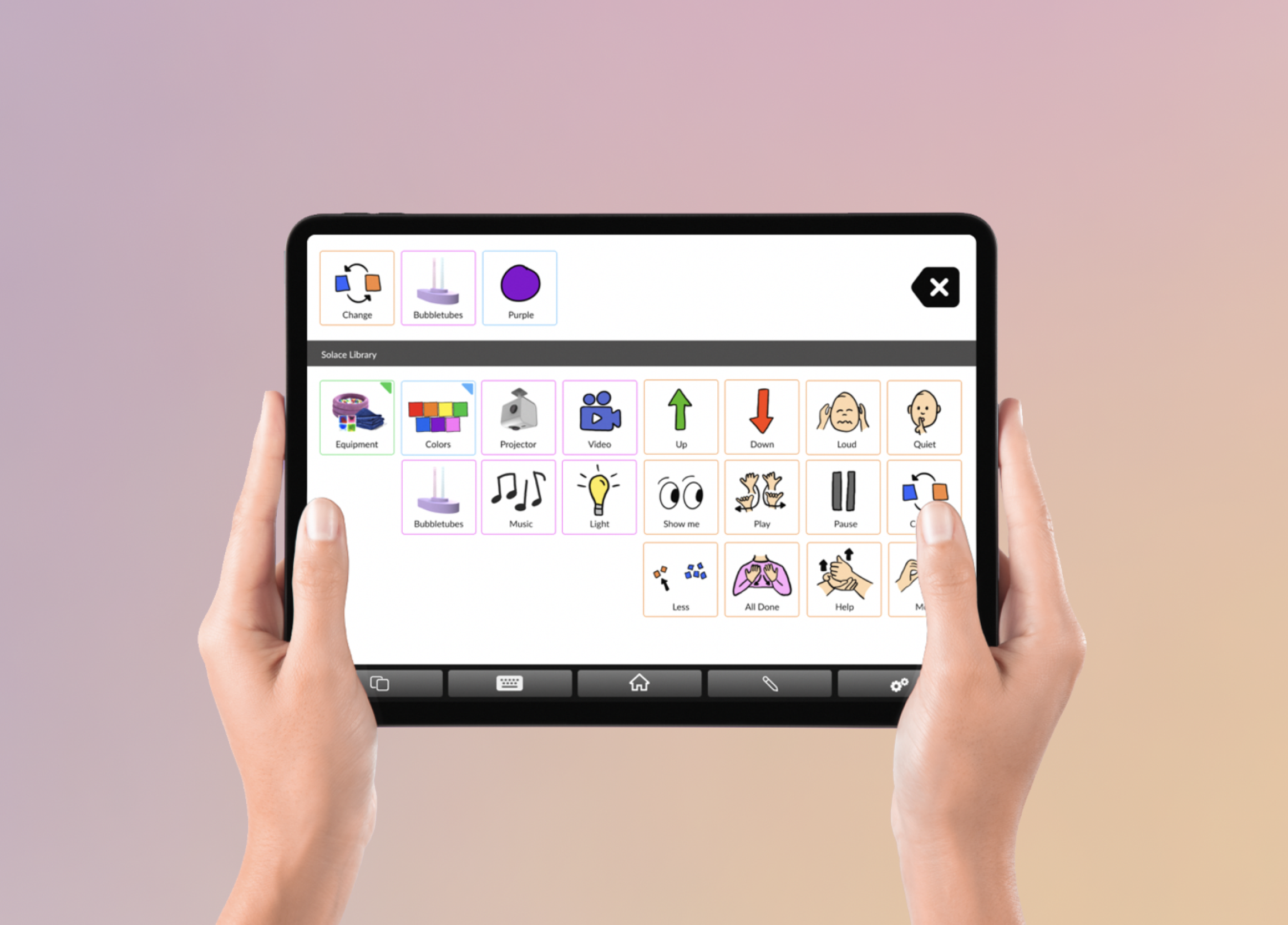
A downloadable AAC (Augmentative and Alternative Communication) library with function and fringe words to allow non-verbal autistic individuals to navigate our space. Non-verbal posters are also available in each room or printable from the website.
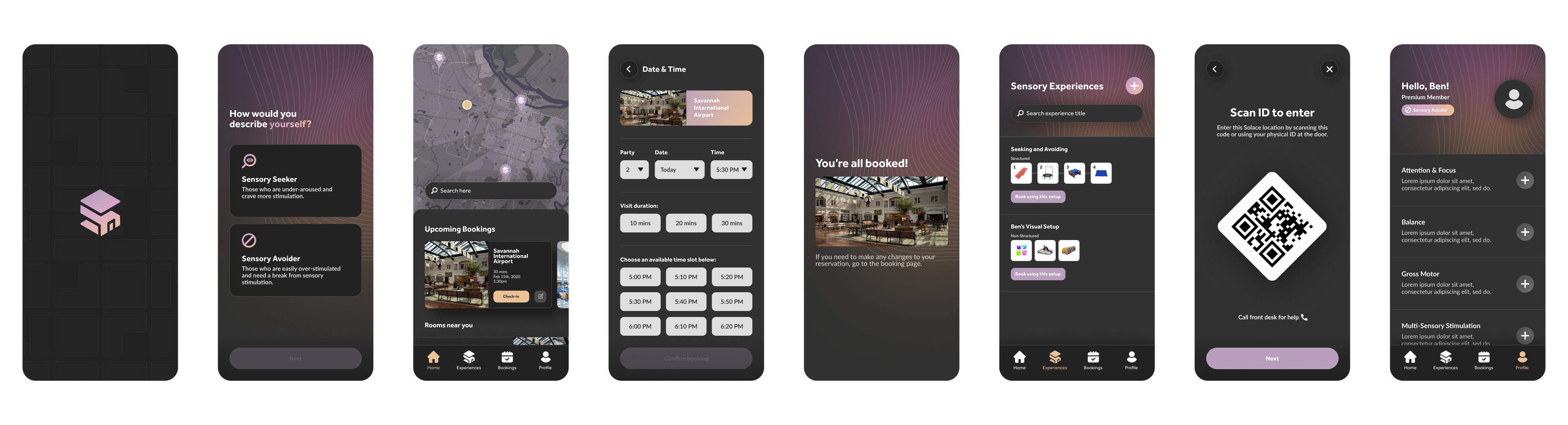
Mobile App Flows
-
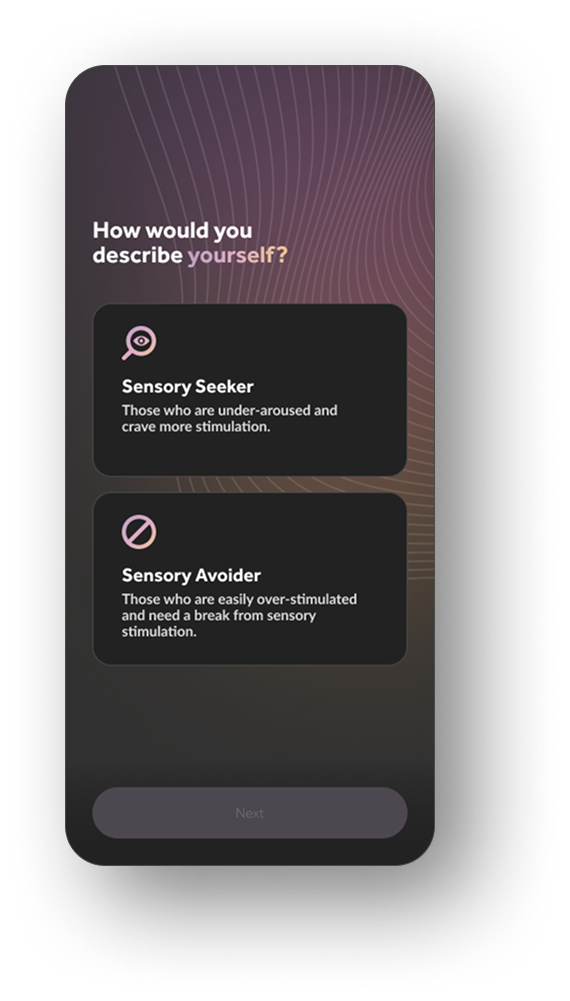
Onboarding
Users input their sensory sensitivities so Solace can learn what type of equipment and room settings to recommend.
-
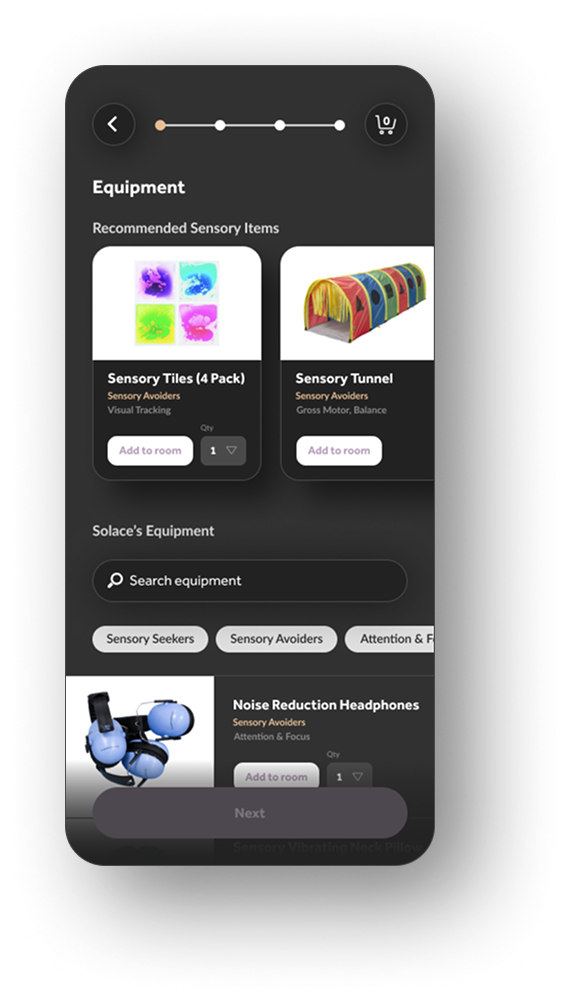
Sensory Experiences
Users can save their equipment, room settings, and structure as sensory experiences to reuse when visiting Solace spaces.
-
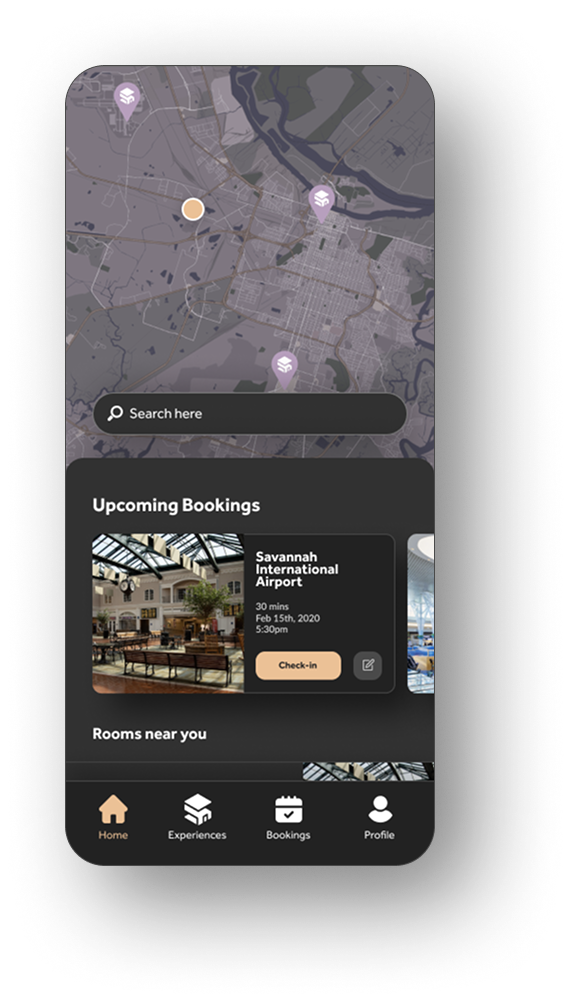
Bookings
Users can see where Solace spaces are locally and book a sensory experience.
-
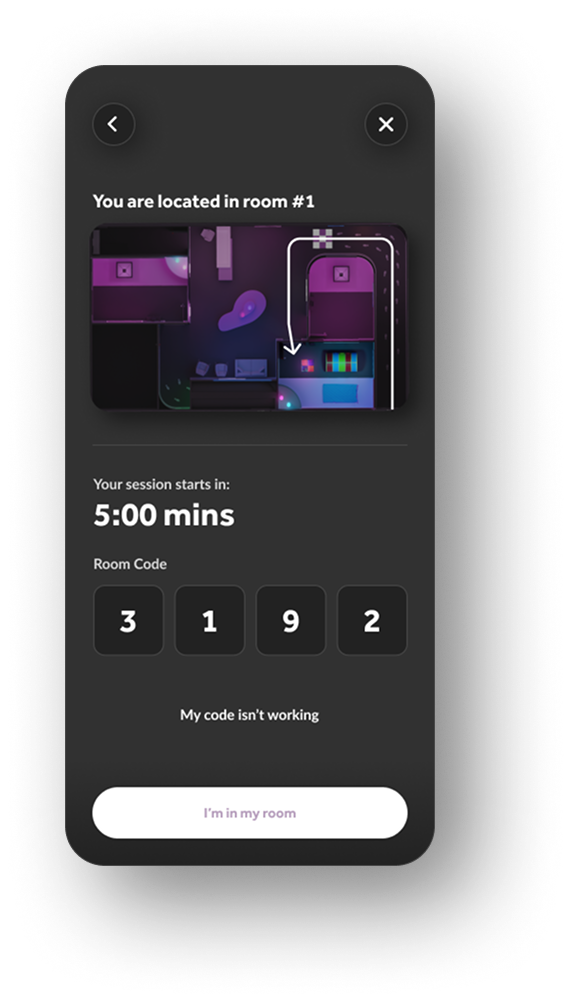
Check-In
Users are guided to spaces using wayfinding. They can use their phone or physical ID to be granted access.
-
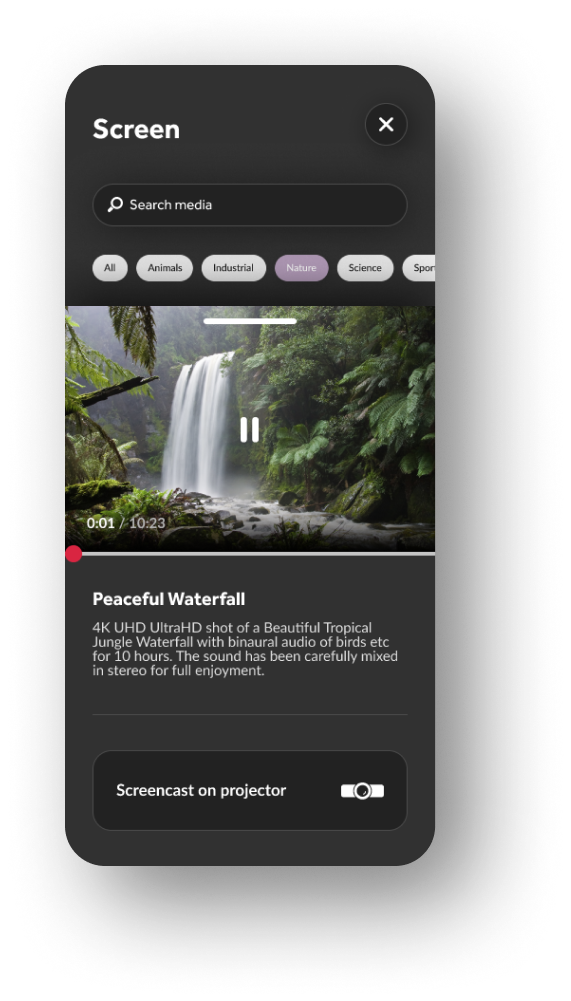
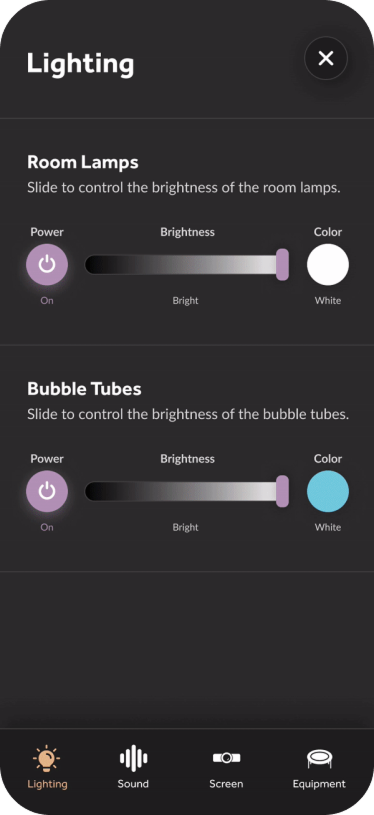
Room Controls
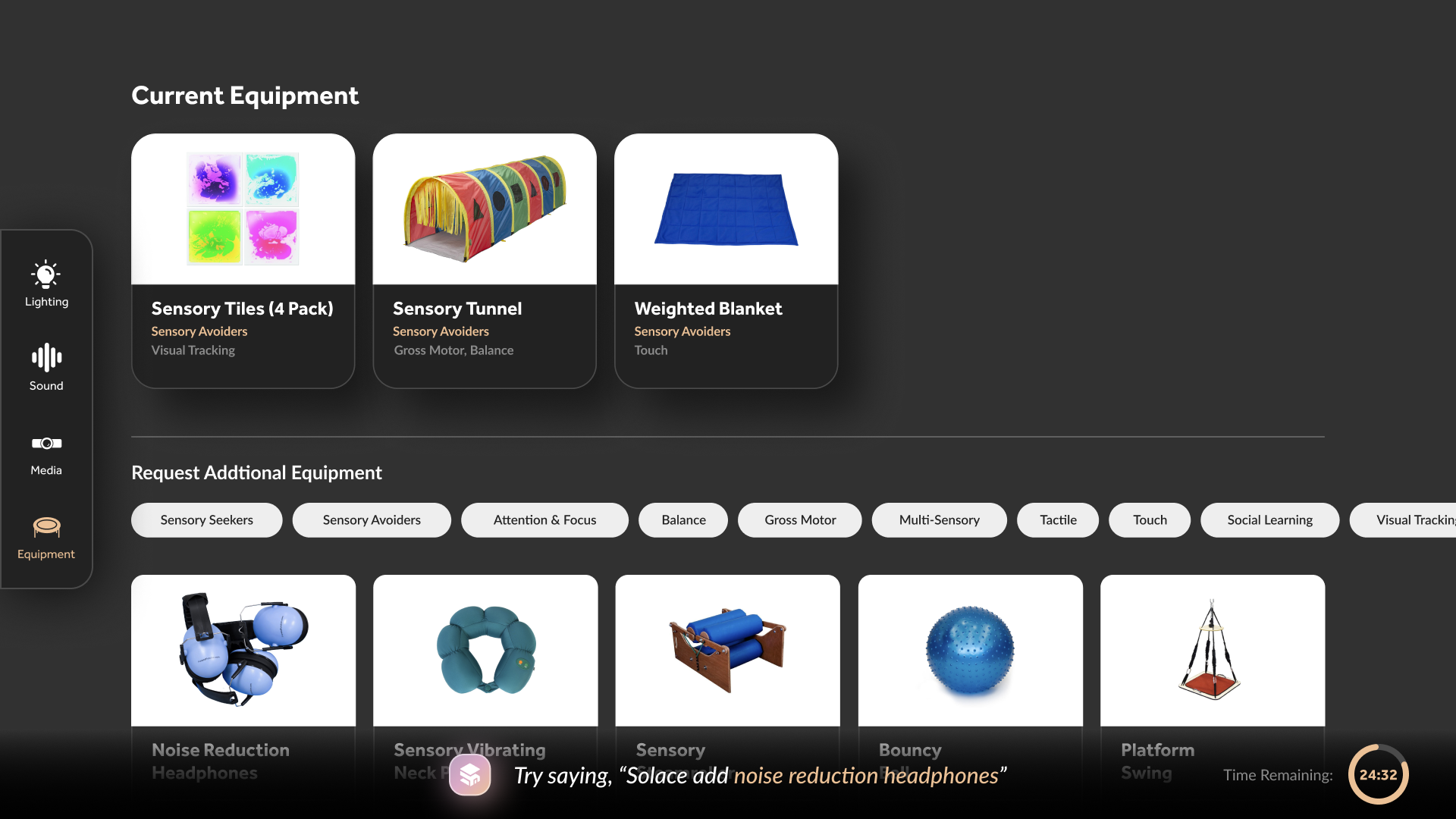
Control the lighting, media, sound, and additional equipment requests within the room for personalized sensory input.
Testing & Validation
Virtual Reality Prototype
"When I opened up the VR, I had some kind of lump in my throat because I can see so many people finding such relief for this. I think it's really, really neat."
, Noreen Hux, Physical TherapistMobile Application
- Visual aids throughout the application were helpful, like the map and large equipment pictures
- Users felt they could trust the application to recommend correct equipment
- Time durations offered for visits felt just right
- Step-by-step structure of setting up a visit felt manageable and helpful
- More personalized profile to input specific sensory needs
- Expected "sensory avoider" and "seeker" labels rather than "active" and "calming"
- Equipment selection interaction felt tedious , a quick-add option was expected
- Wanted the ability to save and reuse favorited equipment lists to speed up booking
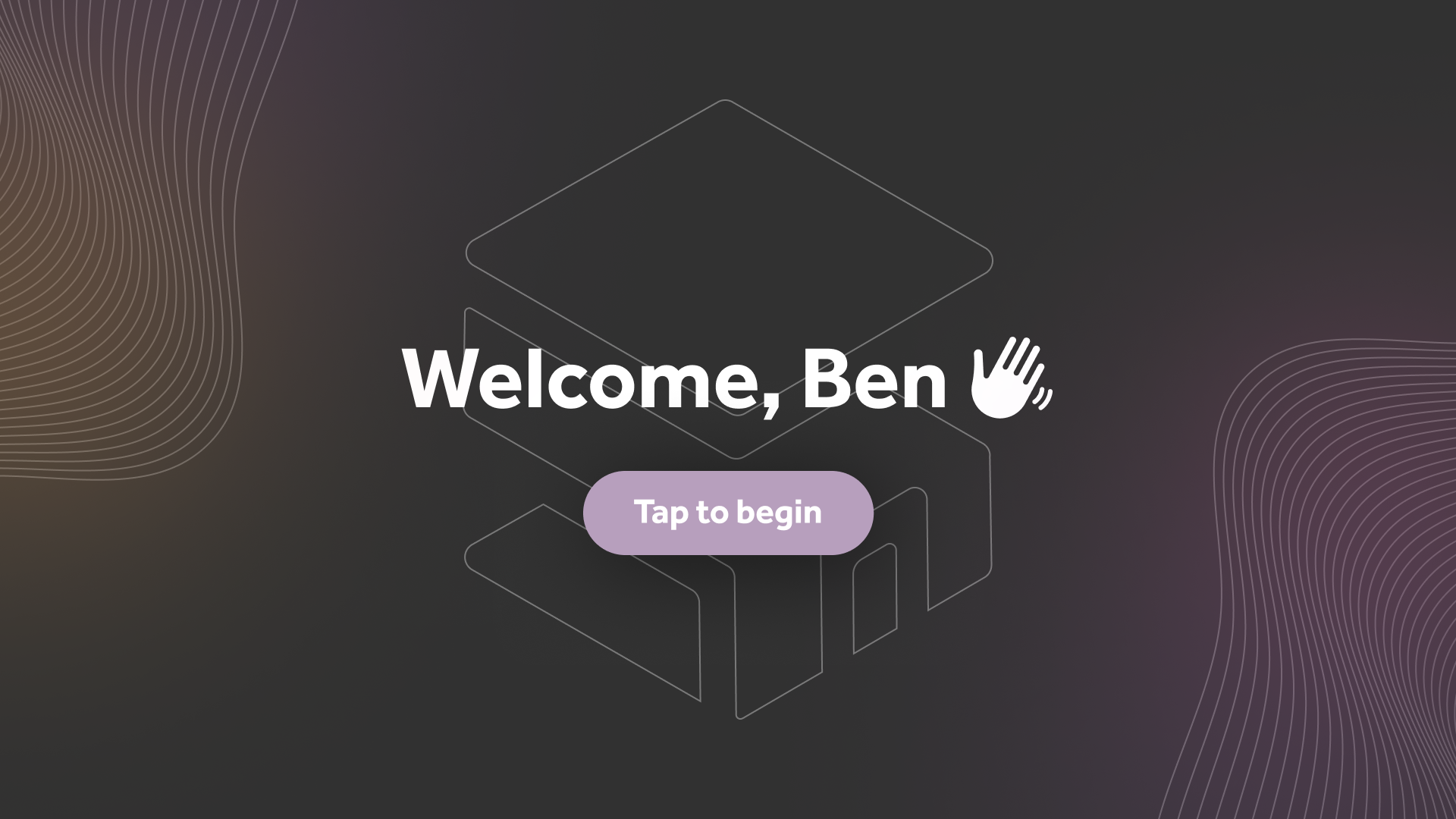
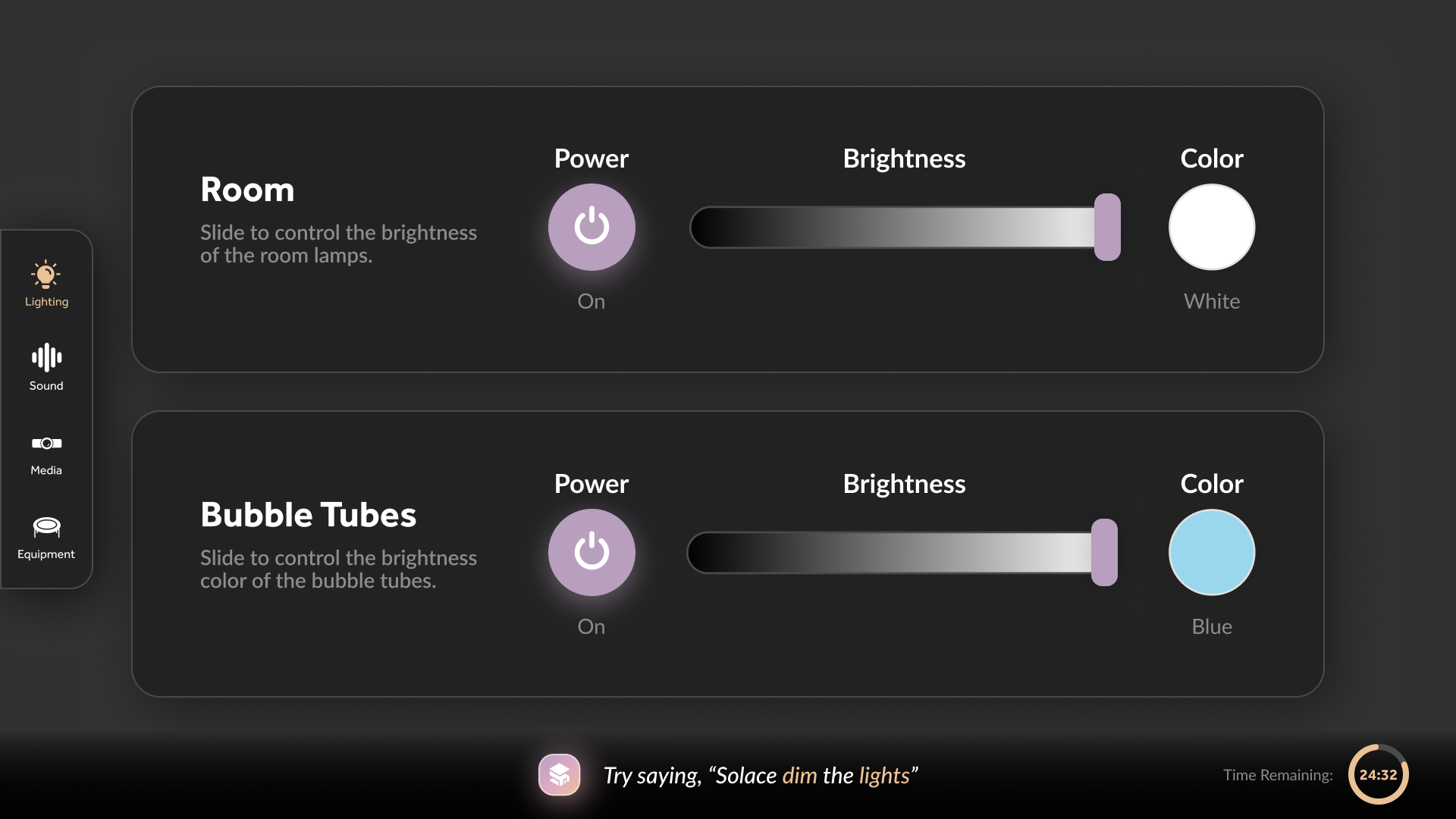
In-Room Tablet Interface
- Adjustable settings that promoted self-sufficiency
- Option to change equipment directly within the room
- Lighting interaction was quick and simple , critical for this user group
- Color palette options , users wanted a triangle/circle spectrum selector
- Interaction and wording for removing equipment from the room was unclear
- Concerns about the tablet becoming a distraction for children in the room
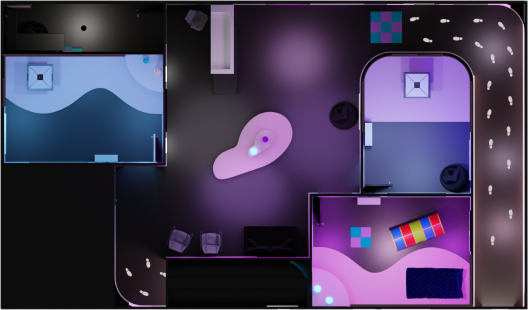
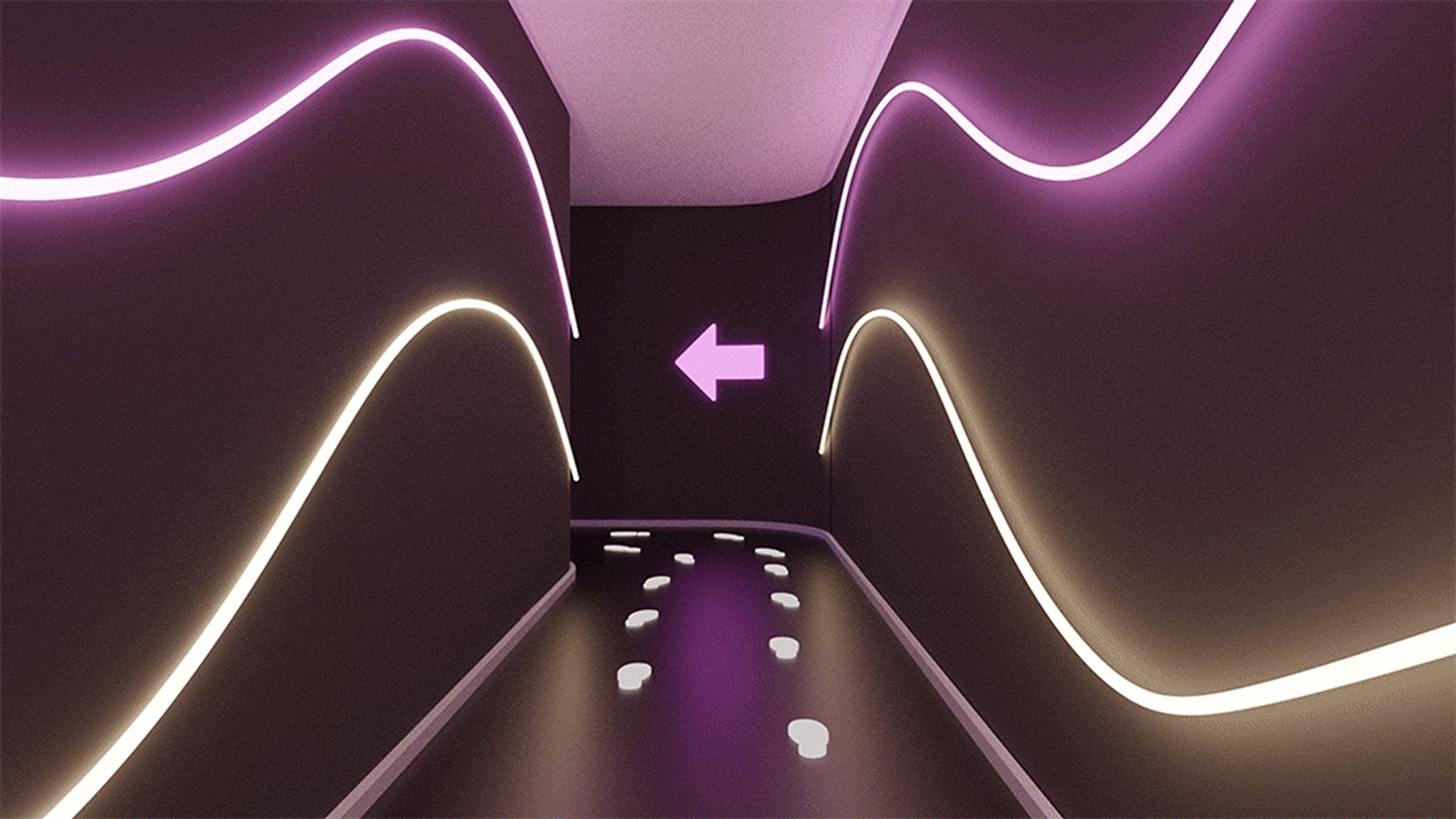
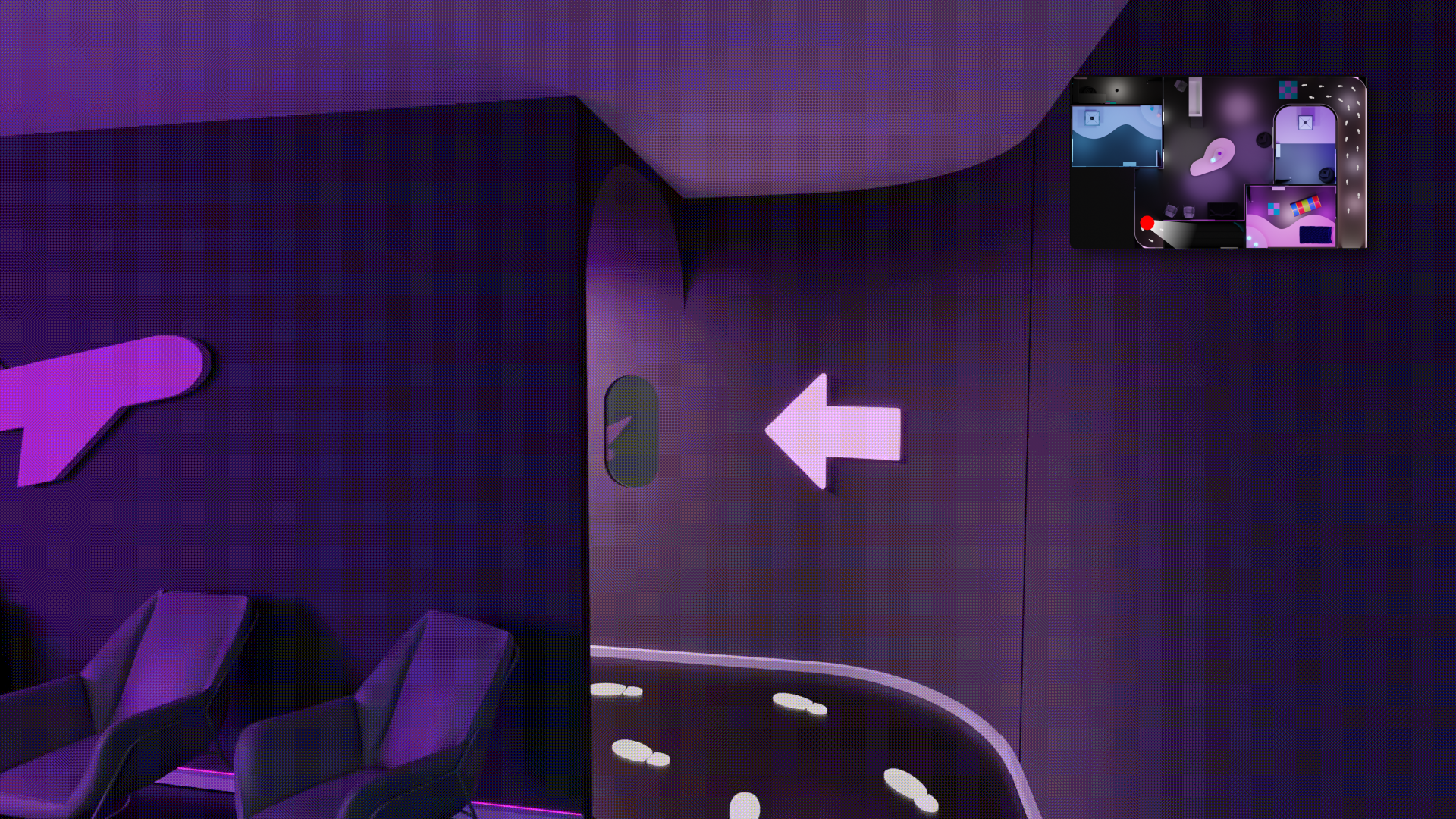
The Spaces , 3D Layout
Senior Thesis Slide Deck

Senior Thesis Slide Deck
The complete 20-week thesis presentation , research, system design, prototypes, and final outcomes.
Visual Identity
The name itself set the design philosophy. Every visual decision had a rationale tied back to our users , our palette couldn't just look good, it had to feel safe. We chose autism-friendly colors grounded in research, and deliberately avoided full-intensity colors like bright reds, blues, and yellows throughout the entire visual system.
Deep Navy
#2B2250
Primary background
Solace Purple
#7B68C8
Primary accent
Purple Mid
#A99DE0
Secondary / hover
Soft White
#F5F3FF
Text / surfaces
Dark Ink
#1A1730
Deep background
Why purple?
Purple sits in the mid-spectrum, calming without being clinical. It evokes trust and safety, both foundational to a product serving the ASD community.
Why dark backgrounds?
Research shows ~85% of children with ASD experience colors with greater intensity than neurotypical individuals. Dark, muted backgrounds reduce visual stimulation and cognitive load.
What we avoided
Full-intensity reds, blues, and yellows were deliberately excluded. High-saturation primaries can cause sensory overload , the opposite of what Solace is designed to provide.
Neutrals as a feature
Soft whites and near-blacks do the structural work. Color is used sparingly and intentionally , so when purple appears, it signals something meaningful, not decoration.
Avenir
Clean, rounded geometry that feels approachable without being childlike. Chosen for legibility across age ranges and for users with varied visual processing needs.
sol·ace
/ˈsäləs/ , Comfort or consolation in a time of distress.
The name does two things at once: it communicates the emotional purpose of the product to users, and it signals to the market what this service is for. It doesn't describe a feature , it describes a feeling. That distinction mattered when naming something built for a community that is often defined by clinical language rather than human experience.
My Contribution & Reflection
I led the development of physical prototypes and continued throughout the UX process , designing user flows, refining interactions, and creating the vision video to bring the concept to life.
- Led physical prototype development across all fidelities
- Designed user flows and refined interactions throughout the UX process
- Produced the vision video to communicate the full Solace experience to judges and stakeholders
What I Learned
Research is where the real design work happens.
Solace taught me that designing for underserved communities requires a different kind of care. You can't assume , you have to listen. Every assumption our team brought in was tested, and most needed adjusting. The research process, not the final prototype, was where the real design decisions were made.
Leading the physical prototype work pushed me to think about design across dimensions I hadn't navigated before , not just screens, but space, materiality, and how people with heightened sensory sensitivity would physically experience an environment. That expanded how I think about experience design beyond the interface.
Winning the Indigo Design Award validated the approach , but more importantly, it confirmed that when you ground design in genuine human insight and take the time to test with your actual users, the work speaks for itself.
Let's Connect
I'm always open to thoughtful conversations about design, collaboration, or new opportunities. The best way to reach me is email; I actually read it.