The workshop ran over three days in-person with cross-functional participation from client stakeholders, designers, and engineers. Using a Double Diamond approach, we moved from problem definition through ideation to solution prototyping , spanning lo-fi to hi-fi output. Three strategic levers guided the work: prevention, mitigation, and protection.
Case Study 01
State Benefits Portal
Designing Accessible, Compliance-Driven UX for a State Health Insurance Exchange , at Scale
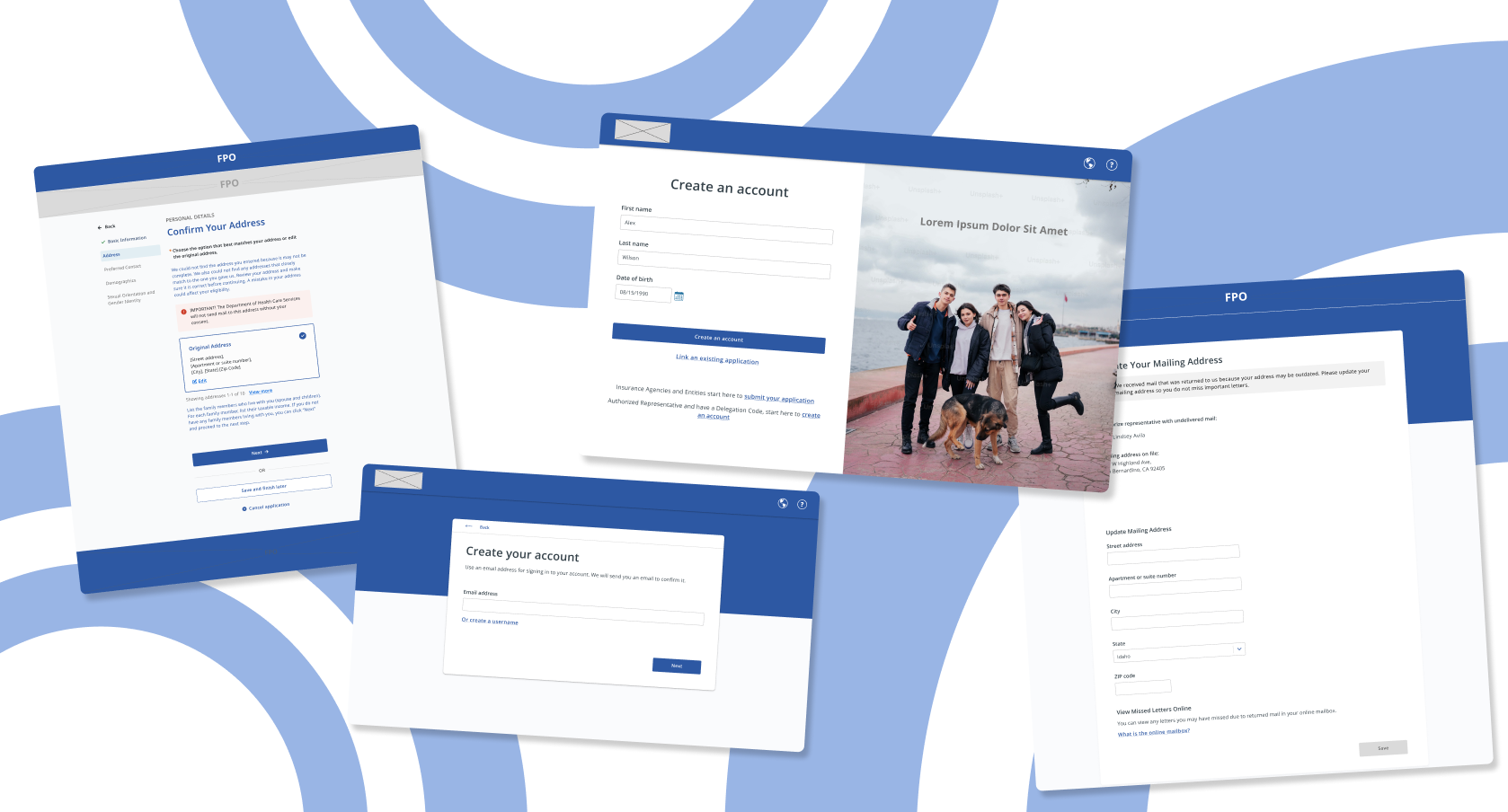
Project Overview
At a Glance
Client
State Health Benefits Exchange (Government & Public Services)
My Role
Design Analyst → Junior UI Designer → UX/UI Designer
Duration
2022 – Present (Multi-year, ongoing)
Team
HCD Design Team, Development & Engineering, Change Request Team, Client Stakeholders
Tools
Figma, Microsoft Co-Pilot, WPS/CM Documentation
Focus Areas
Enterprise UX, ADA Compliance, Design Documentation, Process Improvement, Stakeholder Facilitation
Results
Impact at a Glance
1M+
Renewals processed per cycle with 99%+ success rate
20+
System enhancements delivered per release across eligibility, renewals, notices & UX
19
Complex change requests personally led across 7 releases in a single year
70%
Projected reduction in design handoff time from Figma process reform
5.7M
Residents with duplicate case IDs , the scale of the problem addressed in the Decreasing Duplicates workshop
30%
Projected reduction in duplicate records from workshop-driven CRs in active implementation
Background
Context & Background
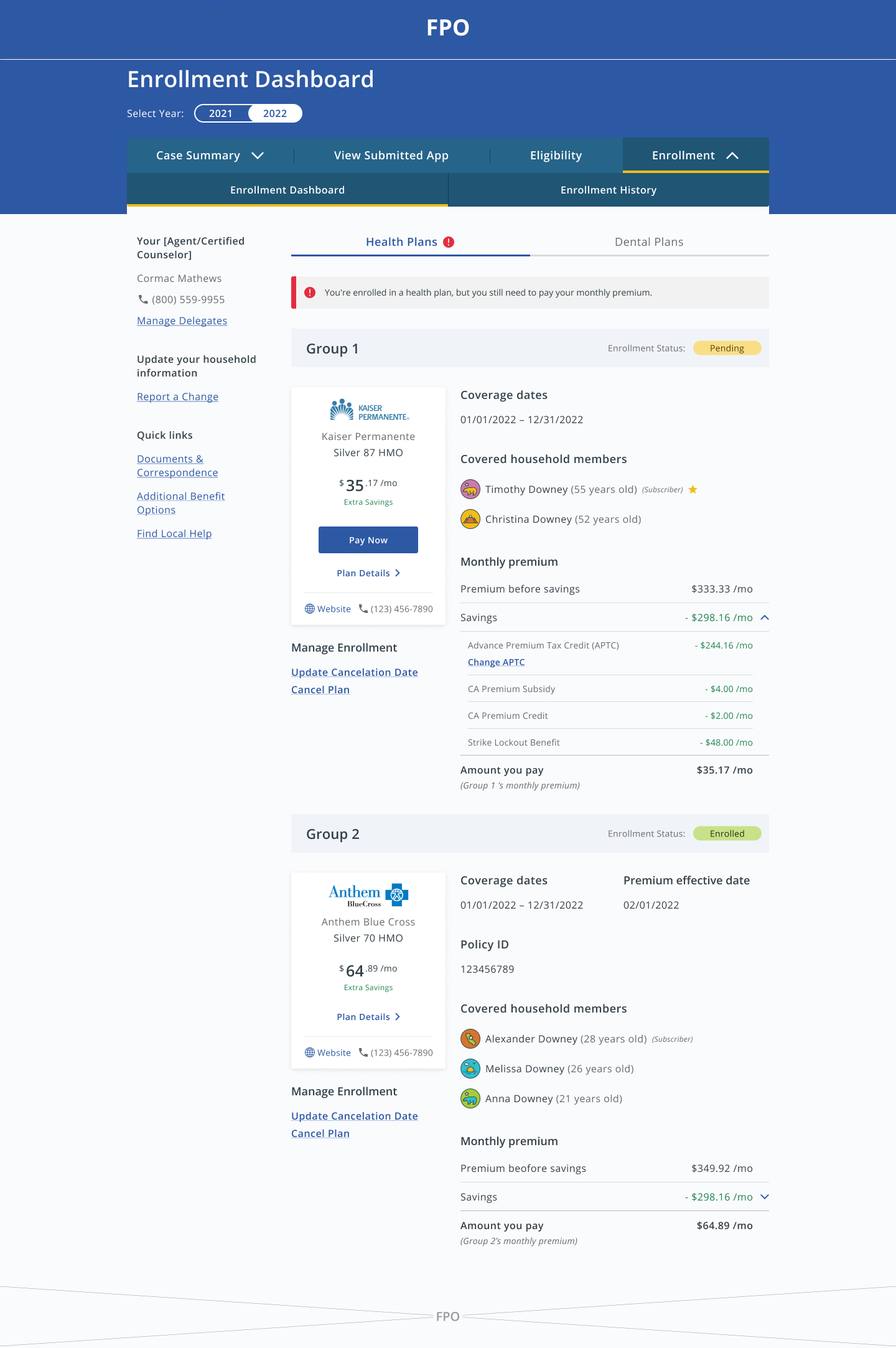
The State Benefits Portal is a federally mandated, compliance-driven platform that enables millions of residents to compare health insurance plans, determine eligibility for financial assistance, and manage their coverage. The platform serves two primary user groups: consumers navigating healthcare enrollment and state administrators managing cases, overrides, and operational workflows. Every design decision carries real consequences , inaccurate UI or a confusing flow can directly affect a person's access to healthcare coverage.
I joined the Deloitte engagement team as a Design Analyst and grew into a UX/UI Designer role over the course of the engagement , progressing from supporting individual deliverables to leading multiple change requests simultaneously, driving process improvement initiatives, and facilitating client workshops. I am currently pursuing promotion to Senior Consultant within Deloitte.
The Problem
The Design Challenge
Six constraints shaped every design decision on this engagement , often in tension with each other.
Federal & State Regulatory Compliance
Every UI decision must precisely reflect regulatory requirements. Non-compliance isn't a design flaw , it's a legal liability with downstream consequences for users and the state.
ADA / WCAG Accessibility Standards
Accessibility standards applied to every deliverable , from individual components to complete enrollment flows , embedded at design time, not as a post-delivery audit.
Agile Sprint Cadence at Volume
19+ concurrent change requests across 7 releases per year , each requiring full design lifecycle ownership, from requirements intake through developer handoff.
Real Residents, Real Stakes
Millions of residents depend on accurate, intuitive UI to make life-changing healthcare decisions. A confusing flow doesn't just frustrate users , it affects access to coverage.
Modernizing Design Practice
An opportunity to modernize documentation practices and align the team's workflow with current industry standards , within contractual constraints and existing team norms.
Data Integrity at Scale
Duplicate records with direct consequences for consumer eligibility and tax accuracy , a systemic problem embedded across multiple user flows and touchpoints.
Responsibilities
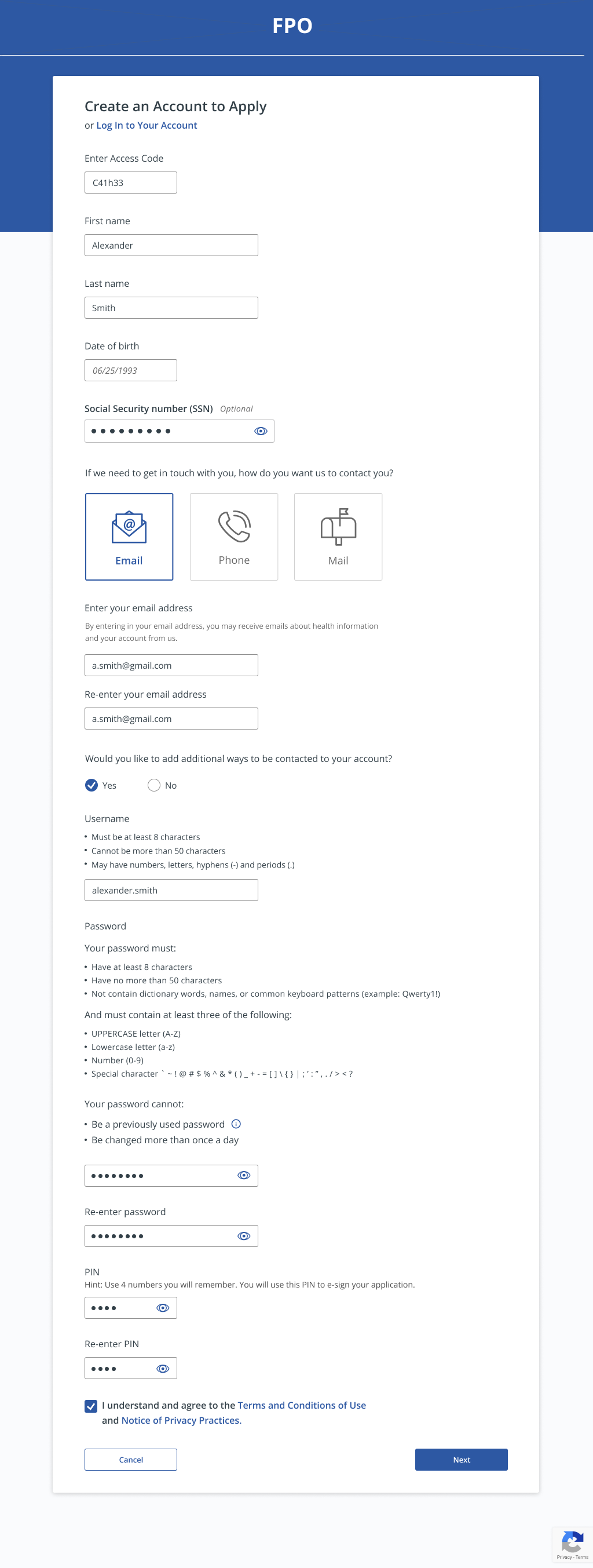
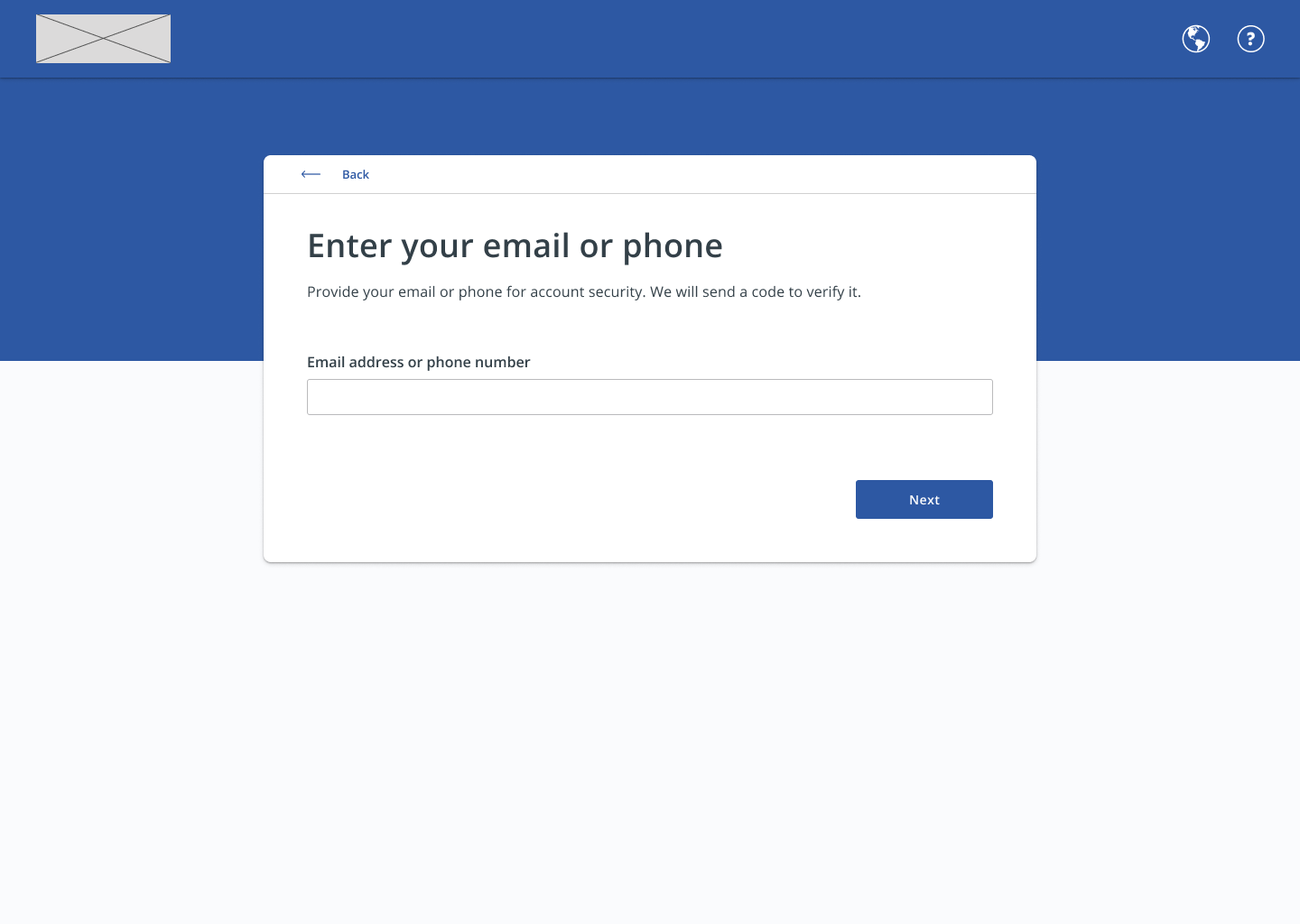
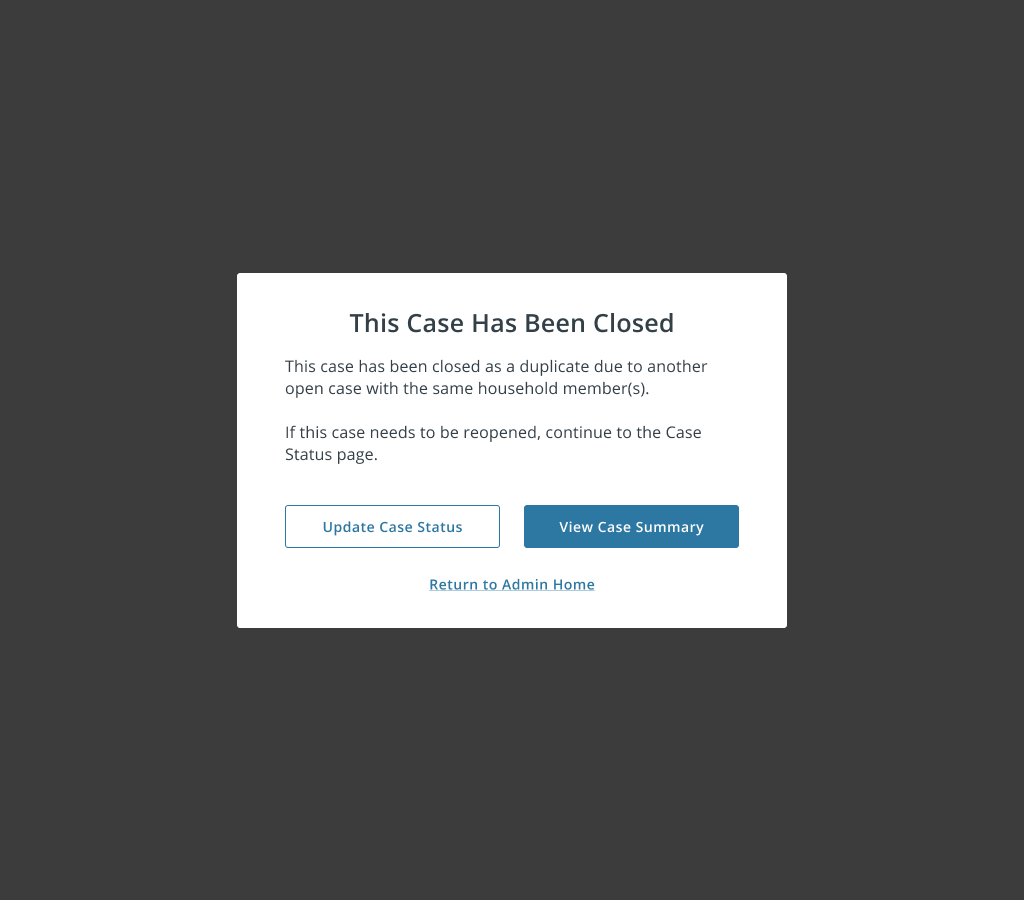
My Role & Responsibilities
Change Request Design Ownership
I own the full design lifecycle for each change request , from requirements intake through developer handoff.
- Attend requirements sessions directly with client stakeholders to capture scope, constraints, and compliance implications before design begins
- Conduct discovery , reviewing existing flows, identifying edge cases, benchmarking against WCAG accessibility standards
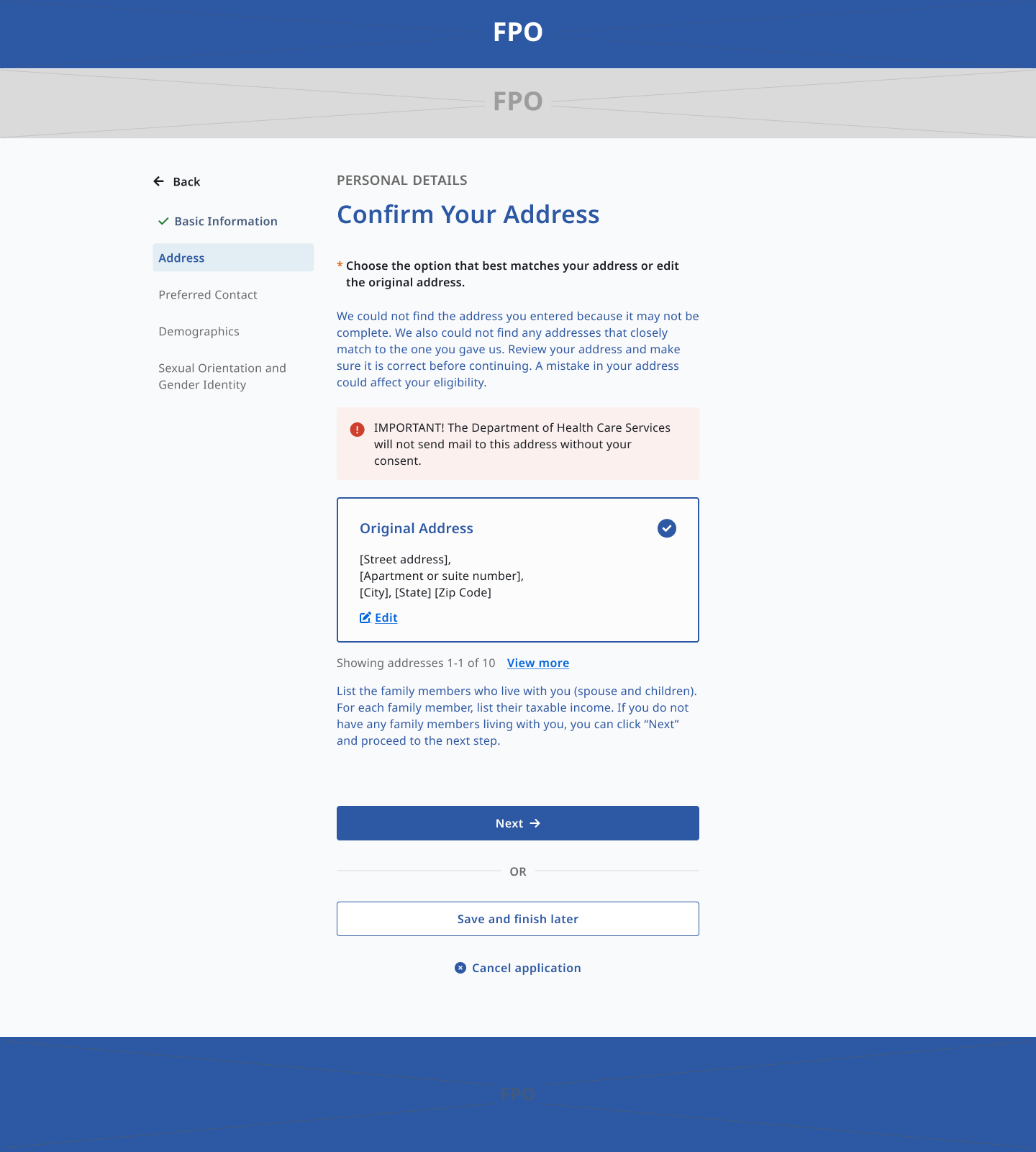
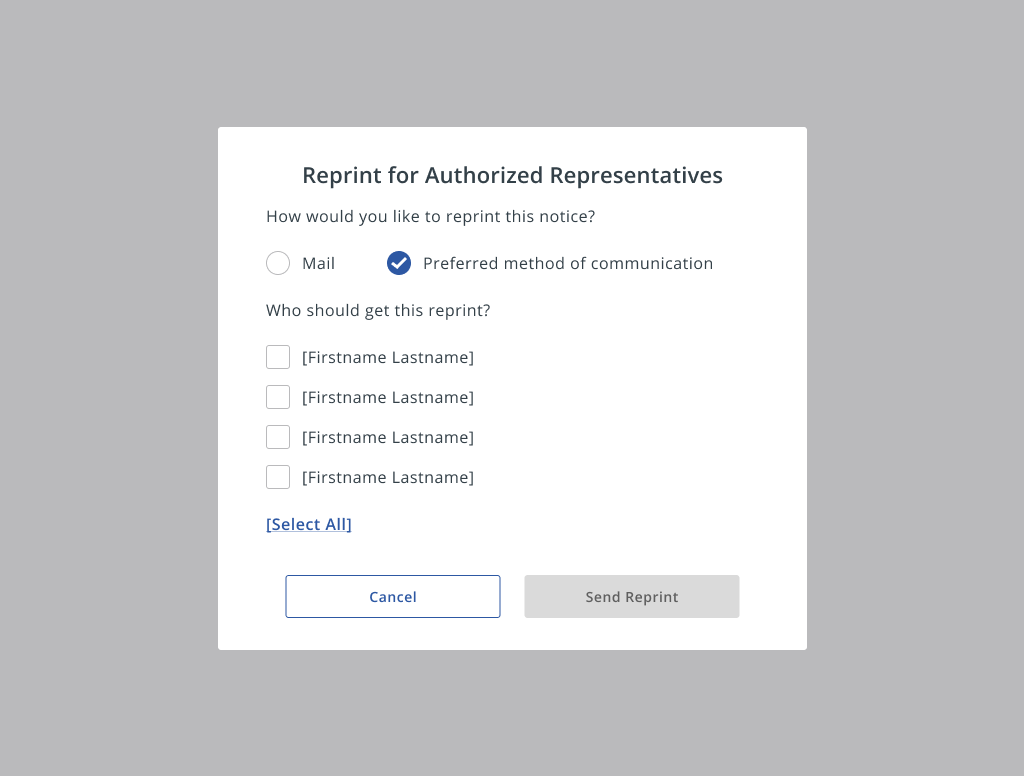
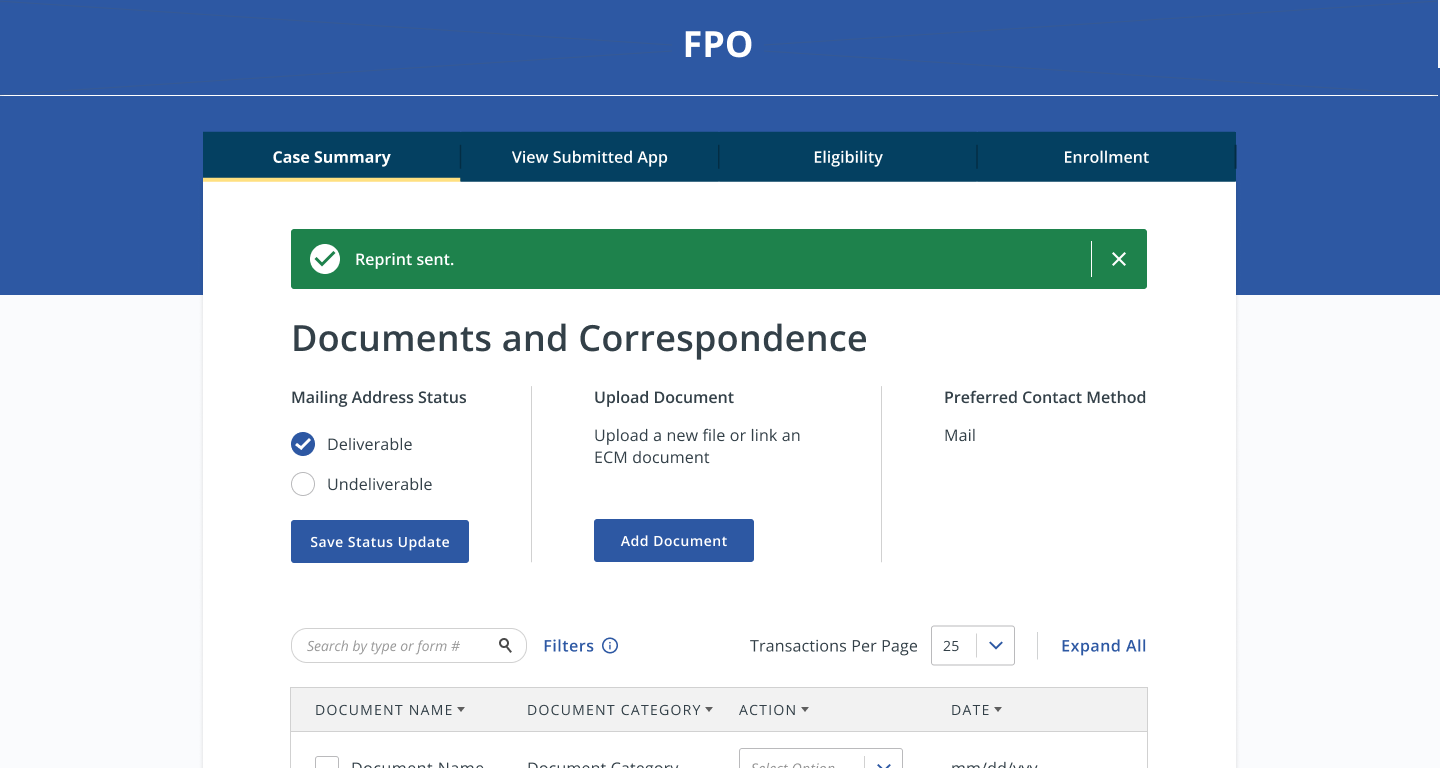
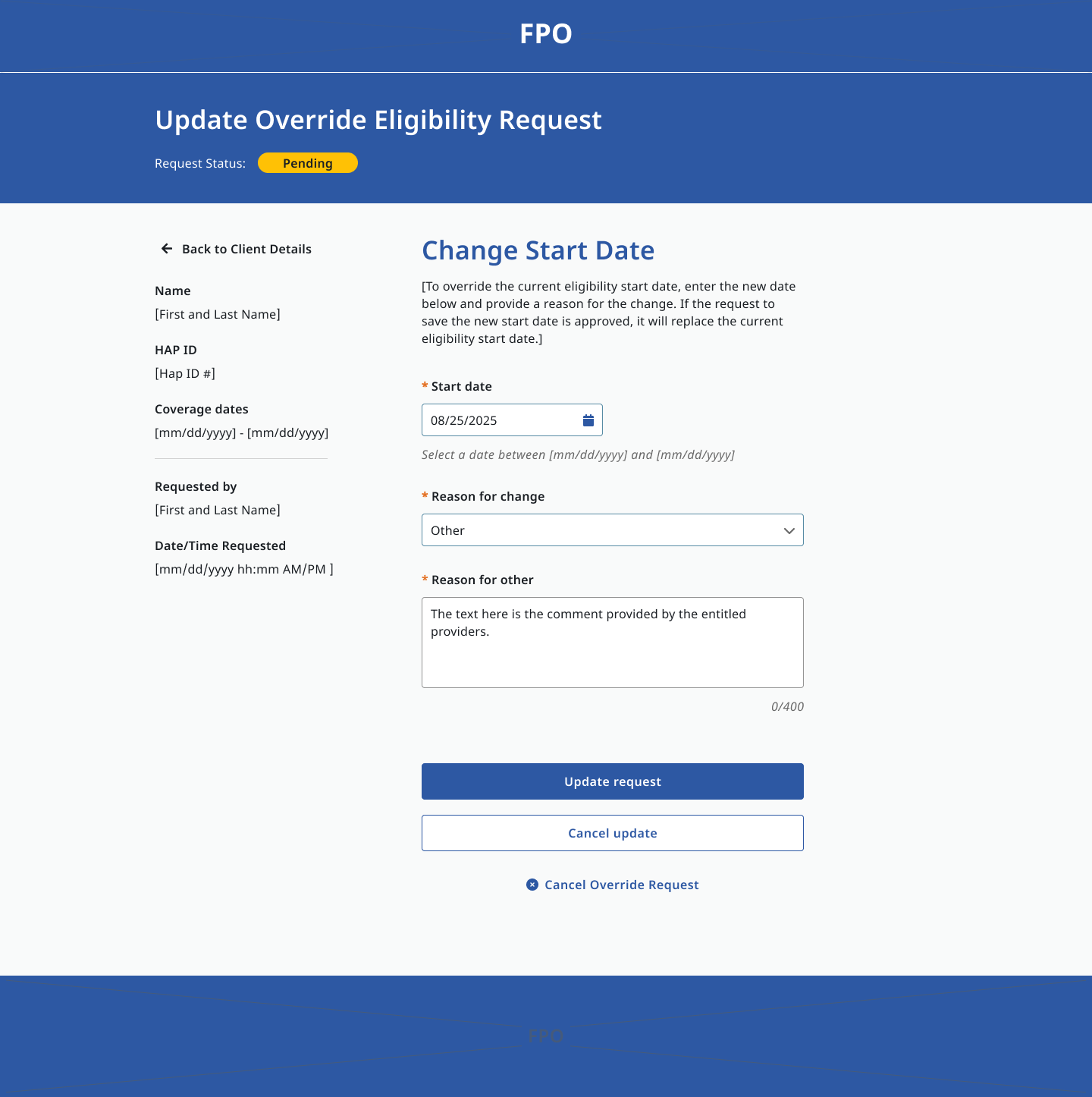
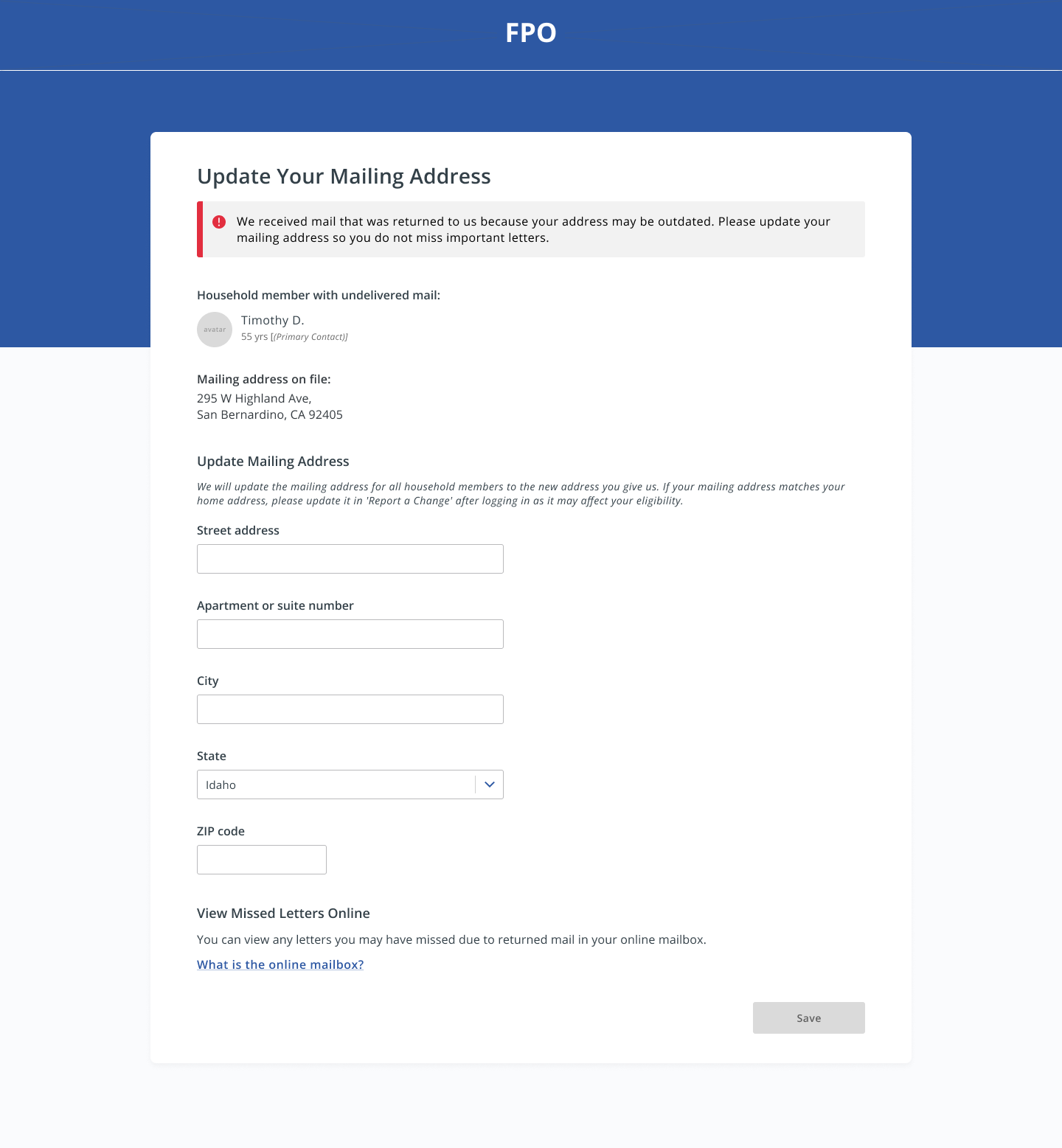
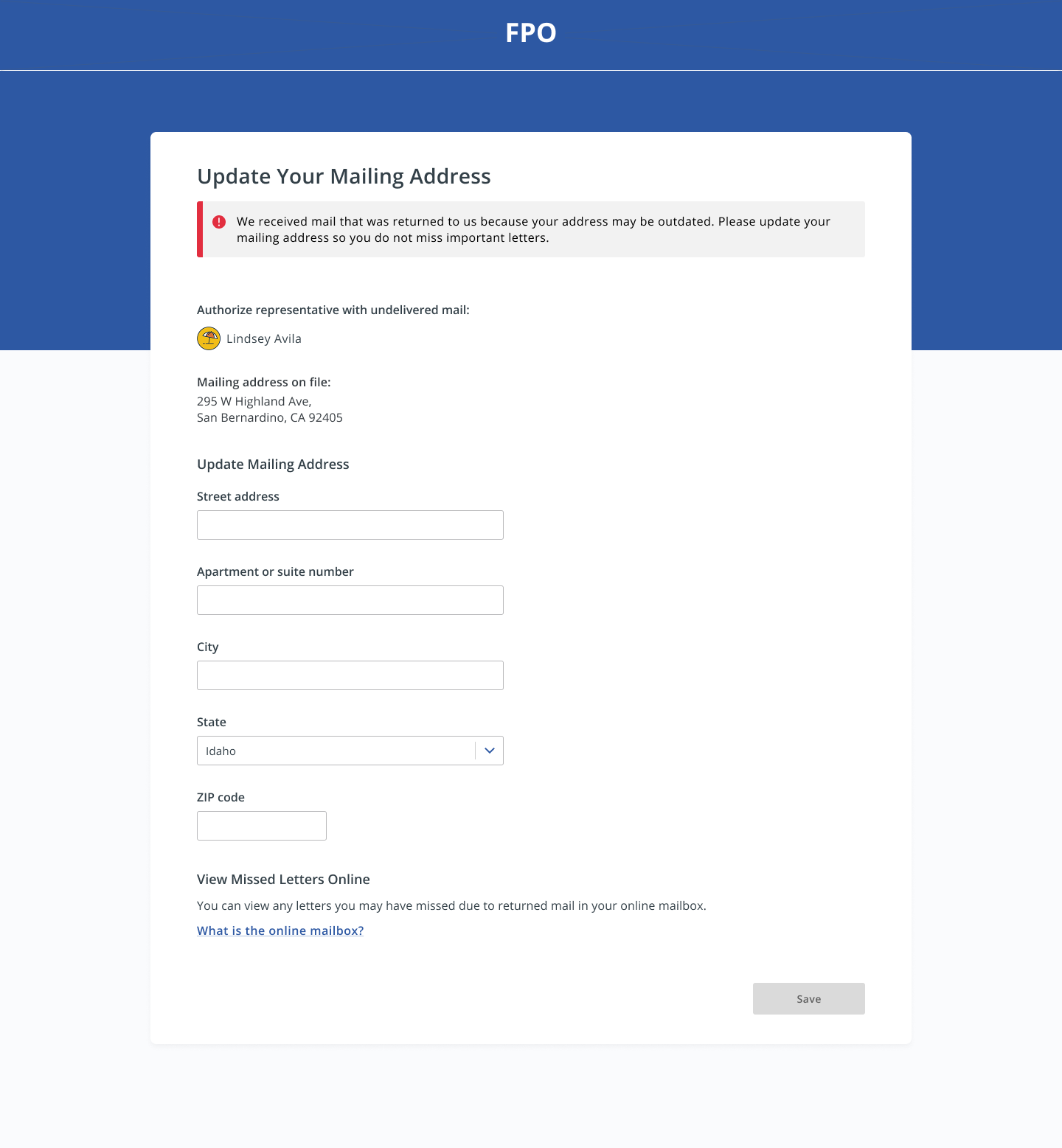
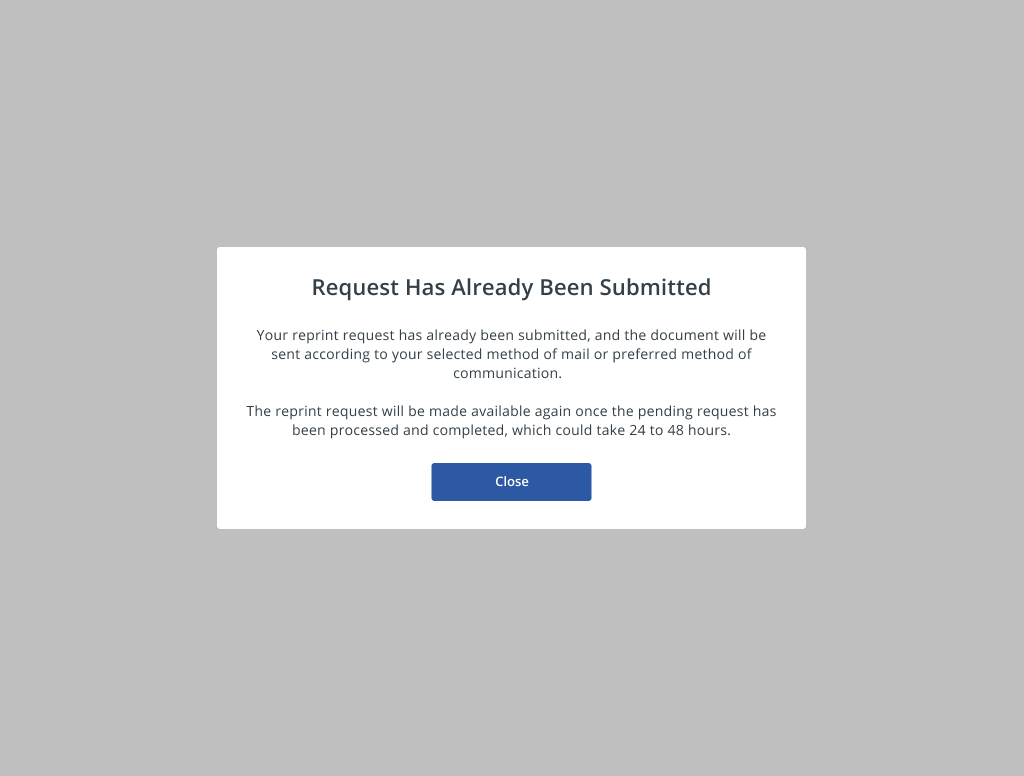
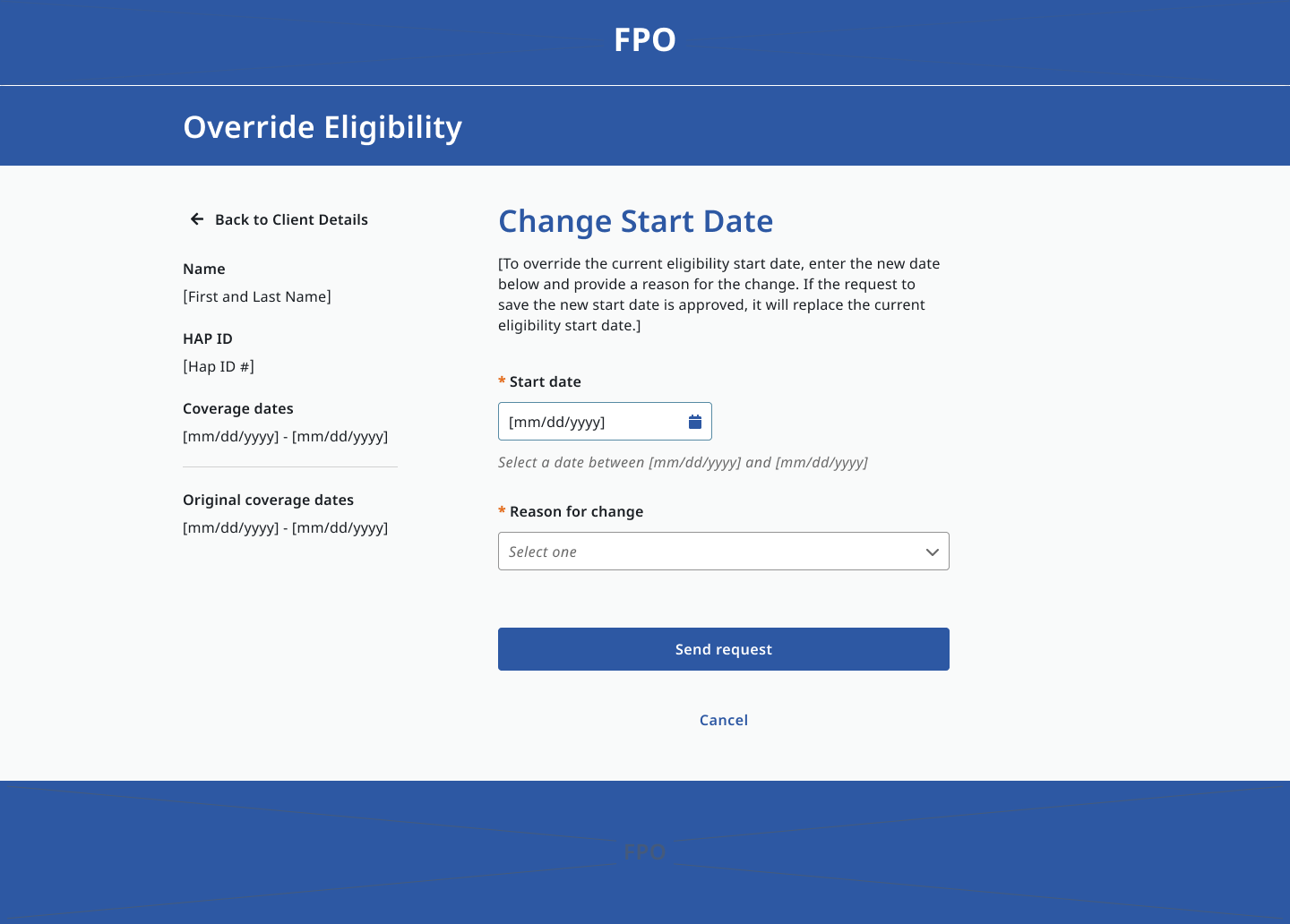
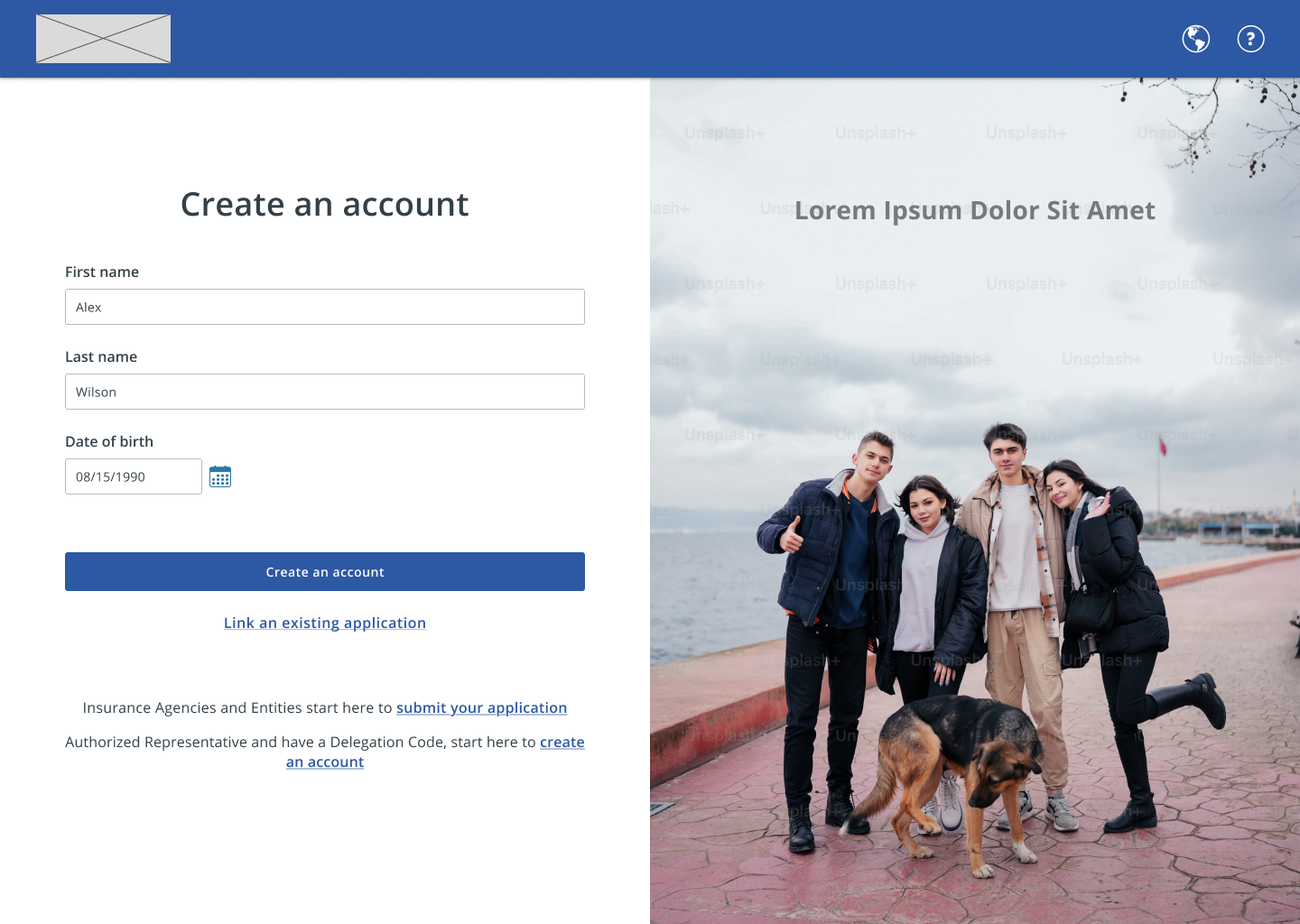
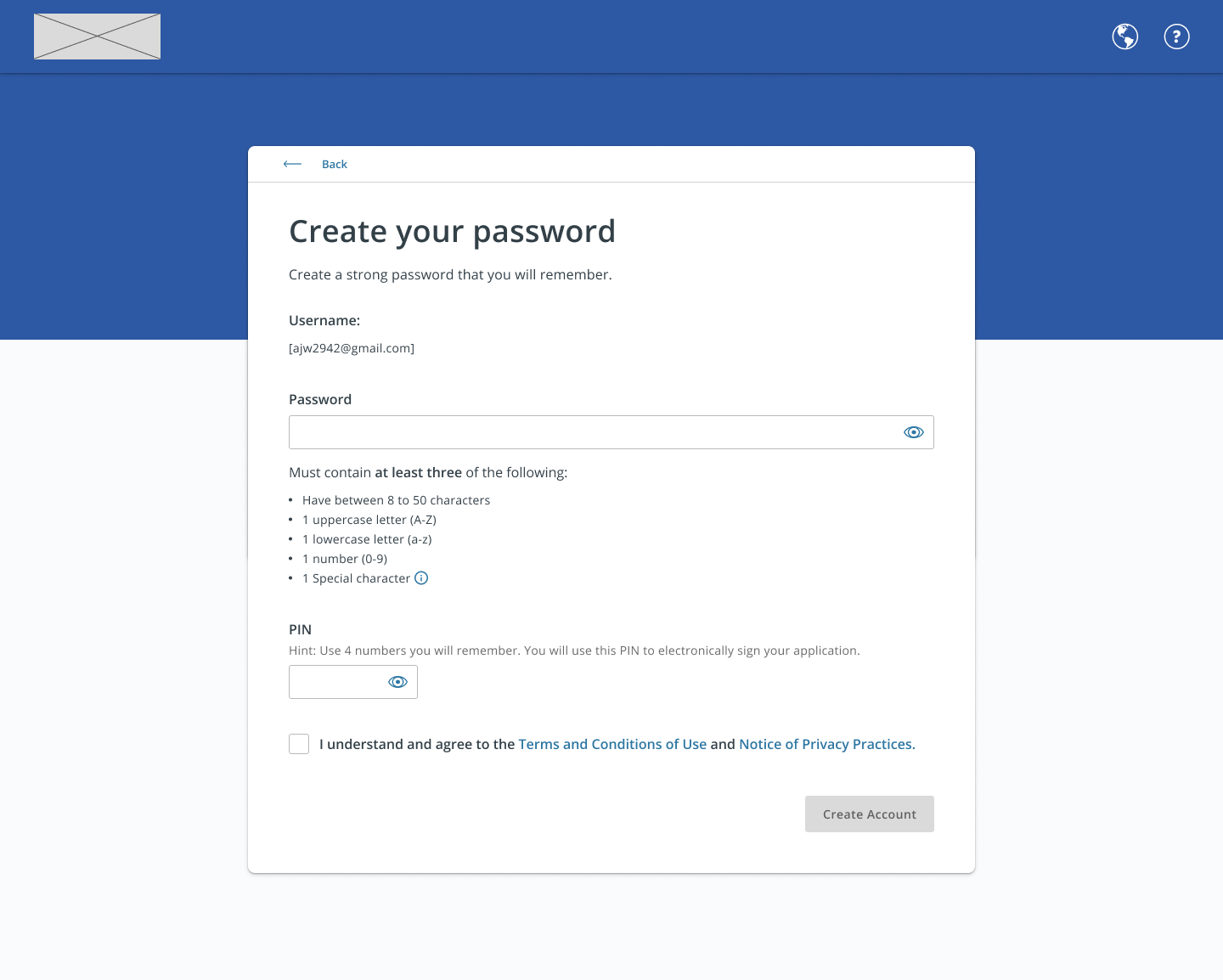
- Design updated flows, modals, dashboards, and pages in Figma, balancing user needs with ADA compliance and regulatory requirements simultaneously
- Participate in twice-weekly client update meetings, presenting design progress and fielding feedback in real time
- Lead developer handoff with annotated ADA compliance documentation, interaction specifications, and Figma-to-dev merges
- Personally led 19 complex change requests across 7 releases in a single year
Documentation & Process Improvement
I identified an opportunity to modernize how the team documents and delivers design work , and drove it from proposal to implementation.
- Identified a gap between the team's existing documentation practices and current industry standards for design handoff
- Proposed a new documentation approach and navigated organizational process to get it reviewed and formally evaluated
- Worked collaboratively with the team to adapt the proposal , the solution that launched was a collaborative middle ground, not a top-down rollout
- Co-led a restructuring of Figma file architecture to support scalability and maintainability across the engagement
- Projected 70% reduction in design handoff time and 30% reduction in project delays from the new workflow
- Secured Microsoft Co-Pilot access for the design team and established an AI-assisted documentation workflow
Figma Structure
◆ Organization
Teams
Projects
Files
📄 Design Files
■ Design System
↷ governs all files
Dev Handoff
Dev Mode
Figma inspect tool
Jira
Ticket & sprint tracking
Confluence
Specs & documentation
Figma's hierarchy isn't just organizational , it determines what's shared, what's versioned, and what engineers can inspect in Dev Mode.
Research, Facilitation & Strategic Contribution
Beyond execution, I contributed to the strategic and research dimensions of this engagement , including co-facilitating a major multi-day client workshop.
- Co-facilitated the 'Decreasing Duplicates' in-person workshop , a structured multi-day session with cross-functional client participation focused on a systemic data integrity problem
- Contributed to research synthesis sessions , affinity mapping, pattern identification, and translating qualitative insights into design direction
- Led workshop structure and helped drive solution development across four identified problem areas using a Double Diamond approach
- Two CRs from the workshop were prioritized and are currently in active implementation for 2026
- Secured Microsoft Co-Pilot access for the team and established an AI-assisted workflow to improve team efficiency
How We Work
Design Process
Each change request follows a consistent end-to-end lifecycle , from business need to deployed feature.
-
Identify & Size
A business, policy, or operational need is identified and formalized as a change request. The team sizes it and determines whether UX discovery is needed before design work begins.
-
Requirements Review
Attend structured requirements sessions directly with client stakeholders. Flag accessibility and compliance implications early , before any design work begins. This is where scope is negotiated.
-
Discovery & Ideation
Audit existing flows, identify edge cases, research regulatory context. For complex CRs, this phase draws on team-conducted user research, competitive analysis, and prior audit findings.
-
Design & Iteration
Design updated flows, modals, dashboards, and pages in Figma , simultaneously balancing user needs, ADA/WCAG compliance, and regulatory requirements. Multiple stakeholder reviews shape each iteration.
-
Testing & Validation
Changes are tested to confirm they work as intended across user types and edge cases. Multi-round review process, QA against ADA compliance specs, and validation of error states and conditional flows.
-
Documentation, Handoff & Monitoring
Annotated design documentation , including ADA compliance specs, interaction logic, and edge case handling , delivered to engineering. Post-deployment monitoring ensures no regressions or unintended behavior.
Spotlight
Decreasing Duplicates Workshop
28.7M
Unique individuals in the system
5.7M
Residents holding two or more case IDs
Thousands
Experiencing overlapping enrollments
30%
Projected reduction in duplicate records
These weren't just data quality issues , they created real harm: incorrect tax liability, eligibility errors, self-service access blocks, and consumer confusion. Our team conducted research to understand how duplicates were being created, synthesized findings across four problem areas, and facilitated a multi-day in-person workshop to drive toward solutions.
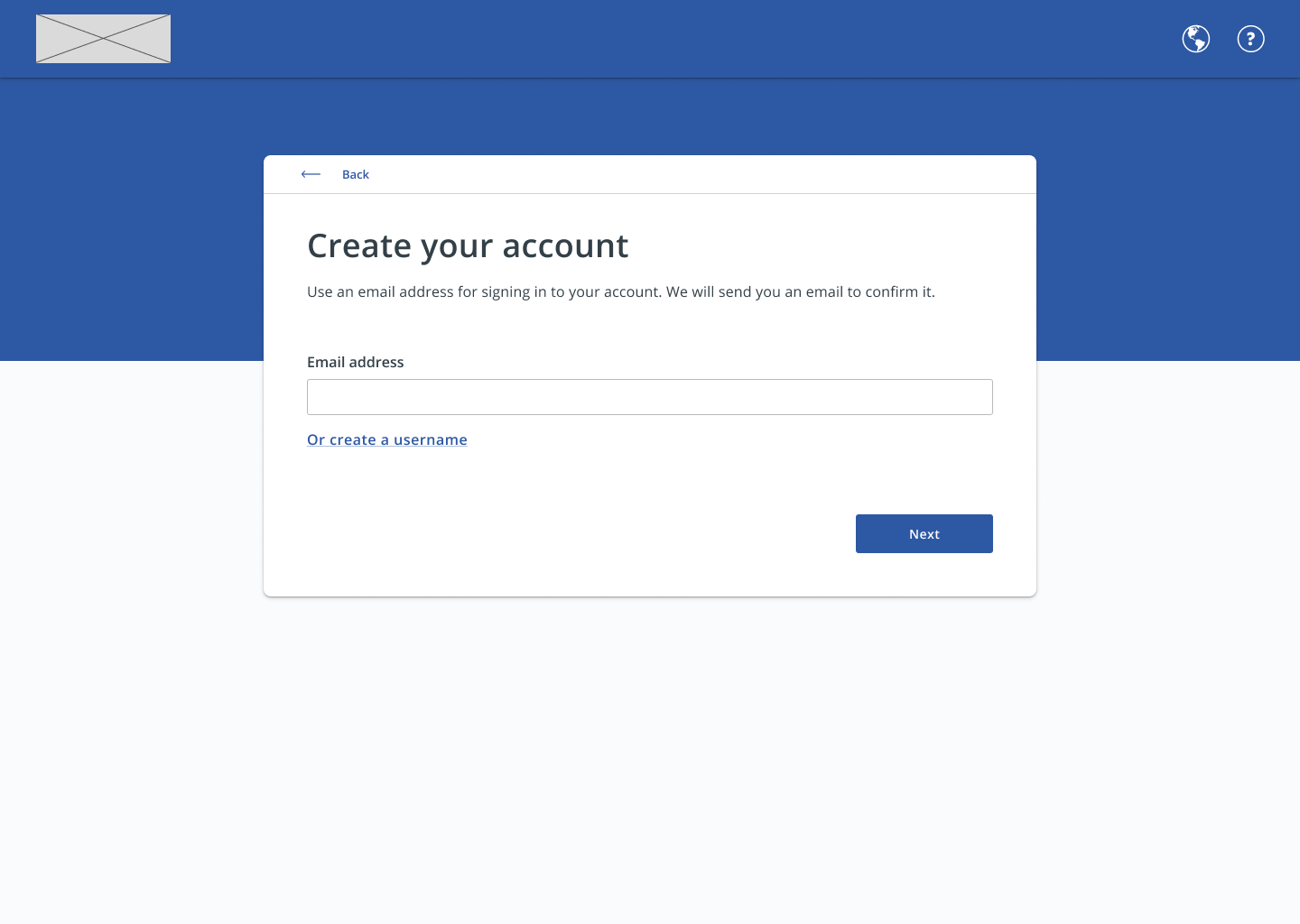
Duplicate Warning Modals
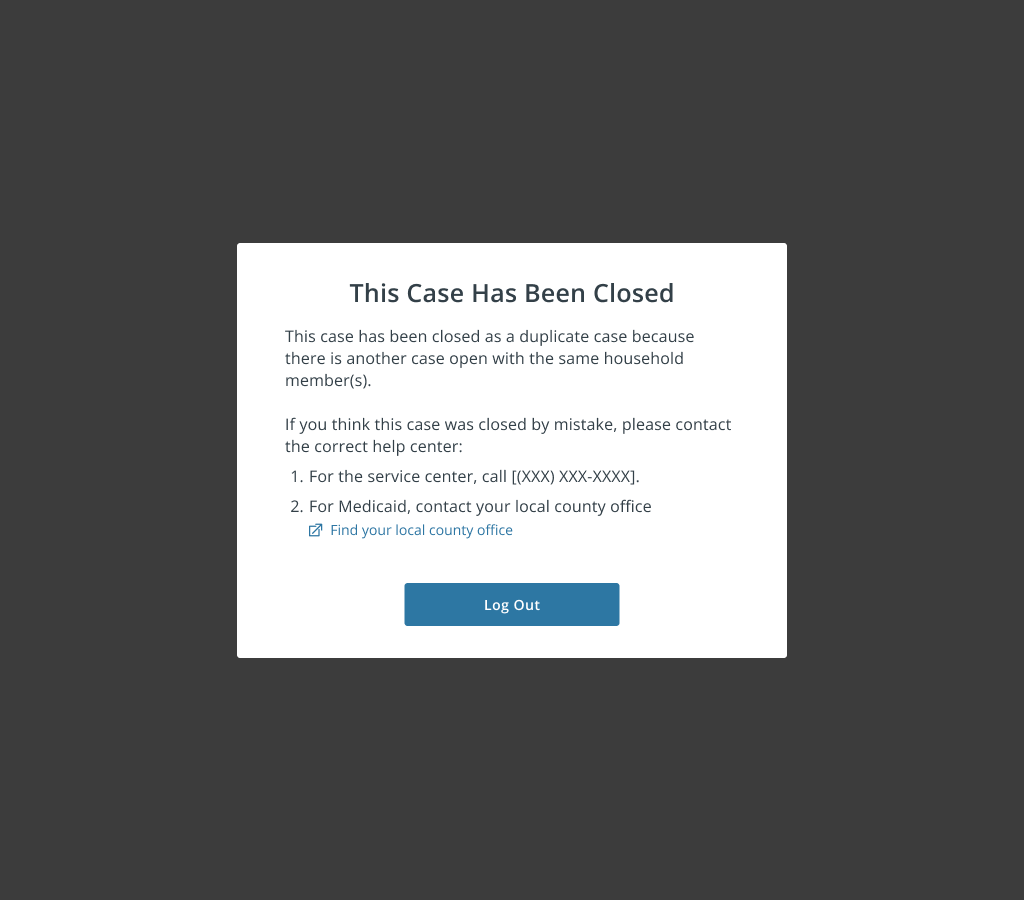
Warnings appeared late in the enrollment flow and were easily bypassed , failing to interrupt the behavior they were designed to prevent at the point of action.
Agent Delegation
Cumbersome 20-minute three-way calls incentivized agents to start a new case rather than follow the prescribed process , a systemic workflow failure built into the system's design.
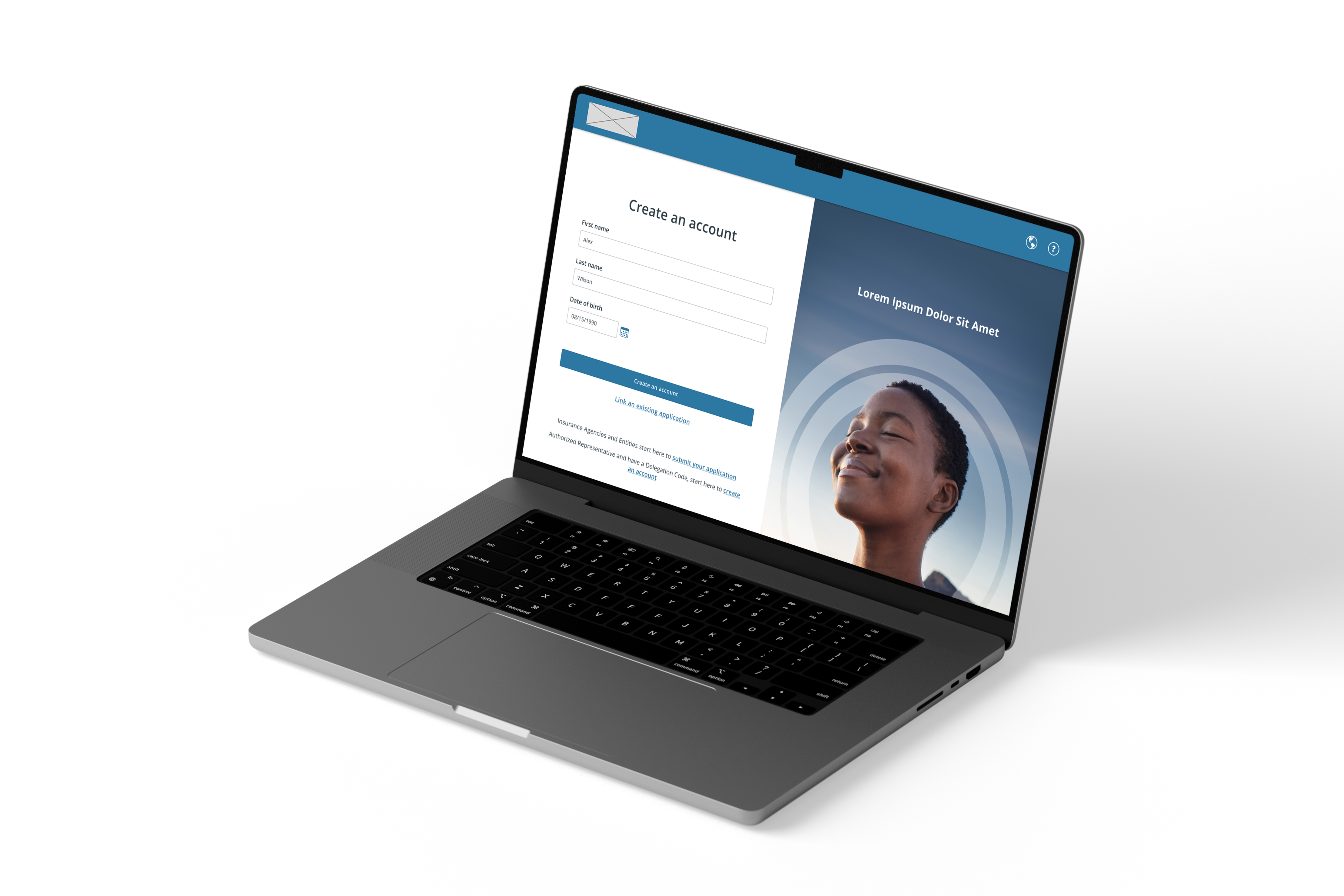
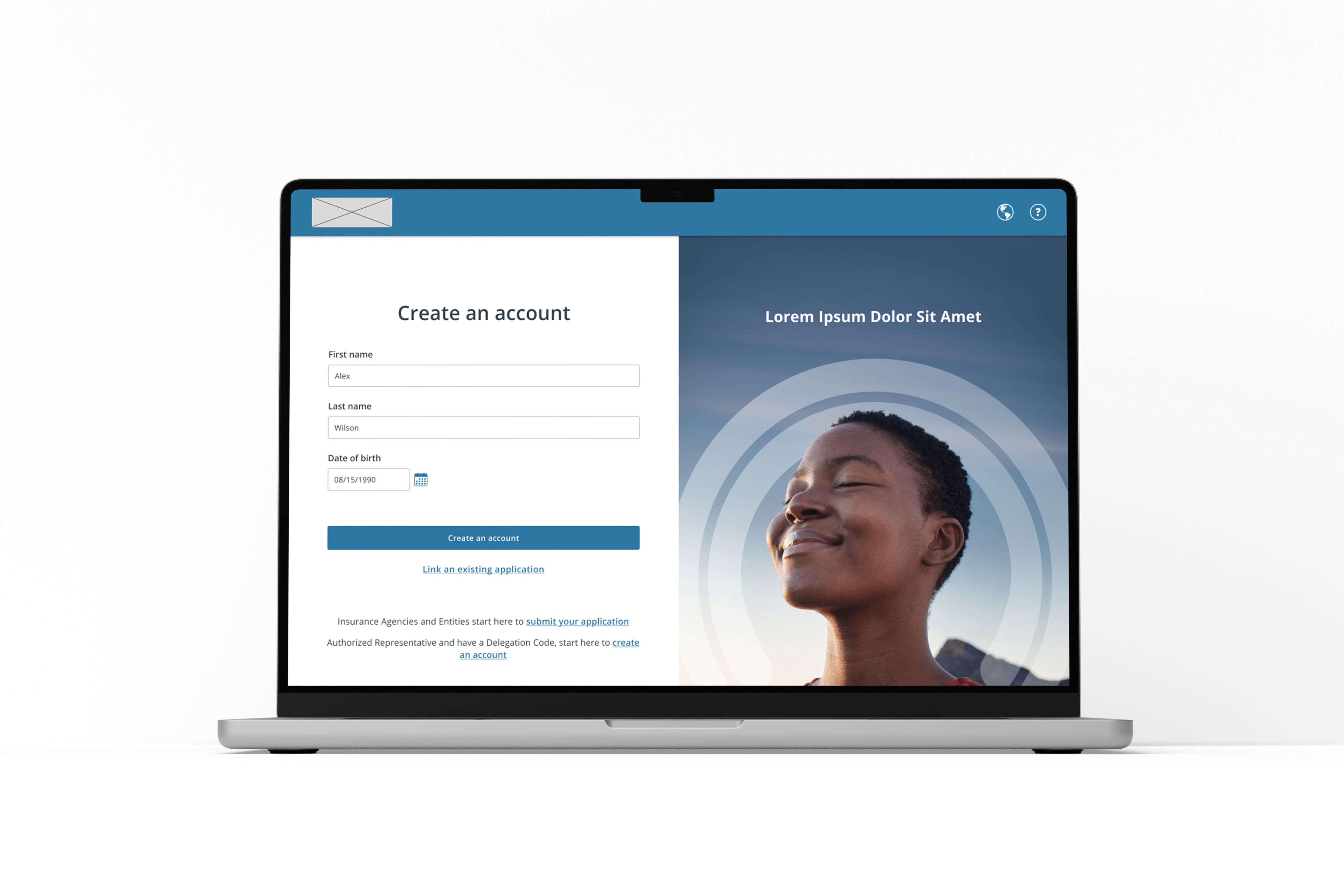
Account Login
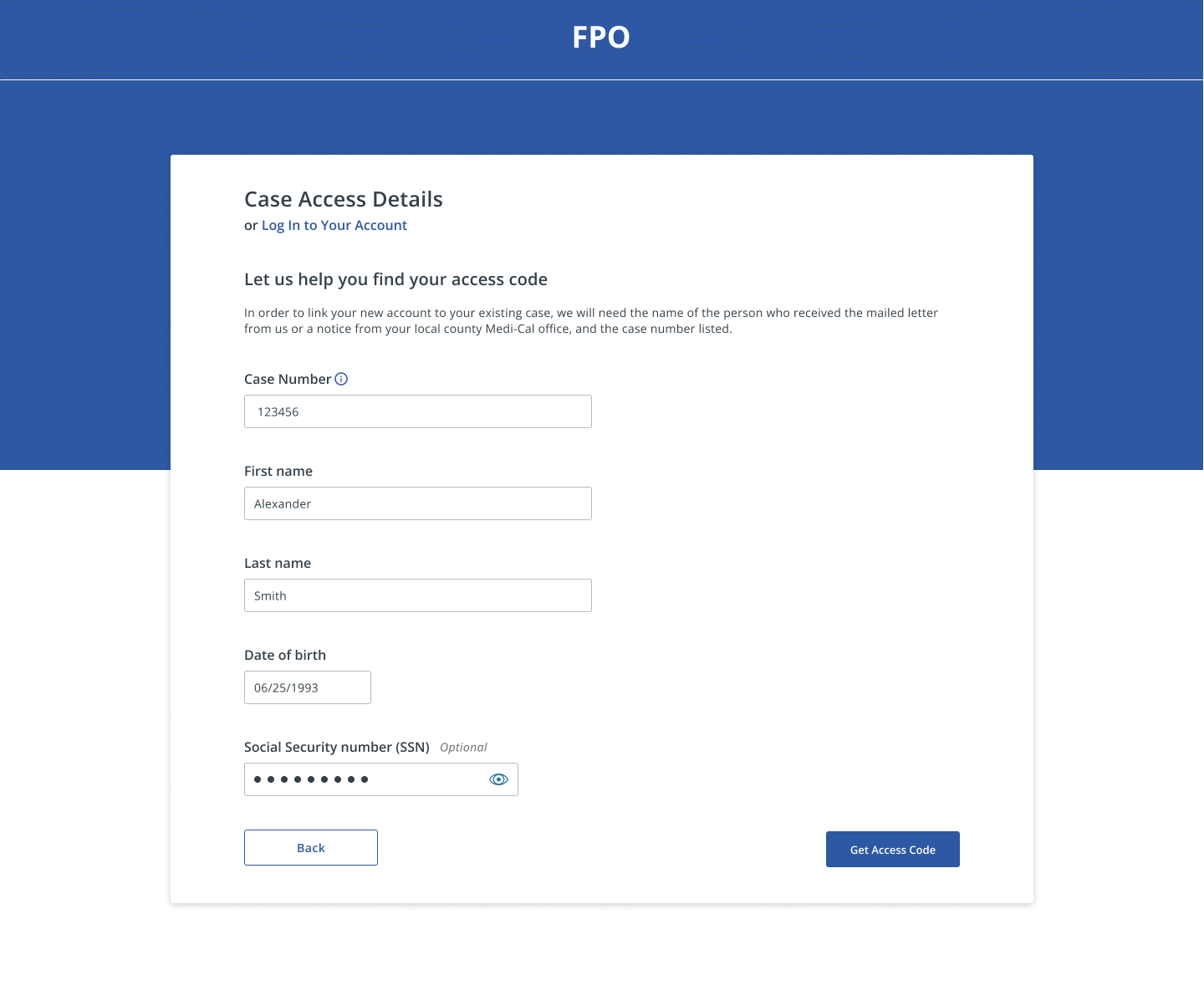
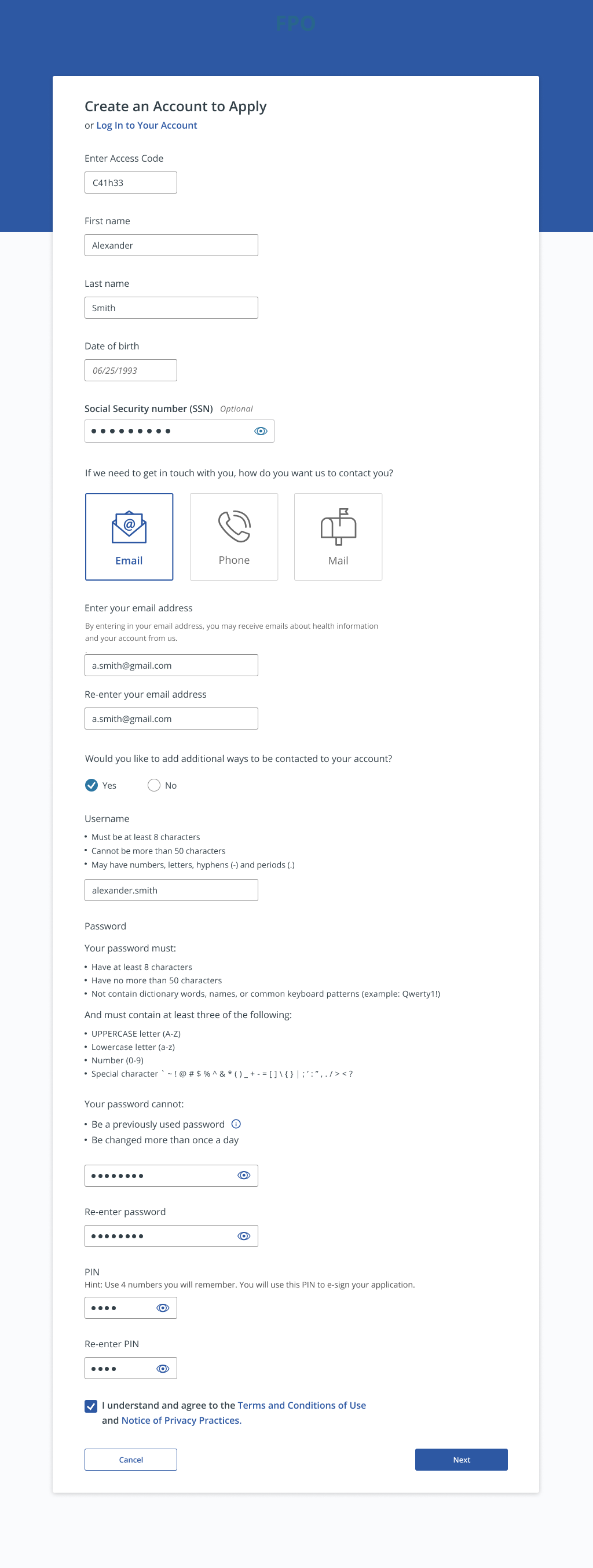
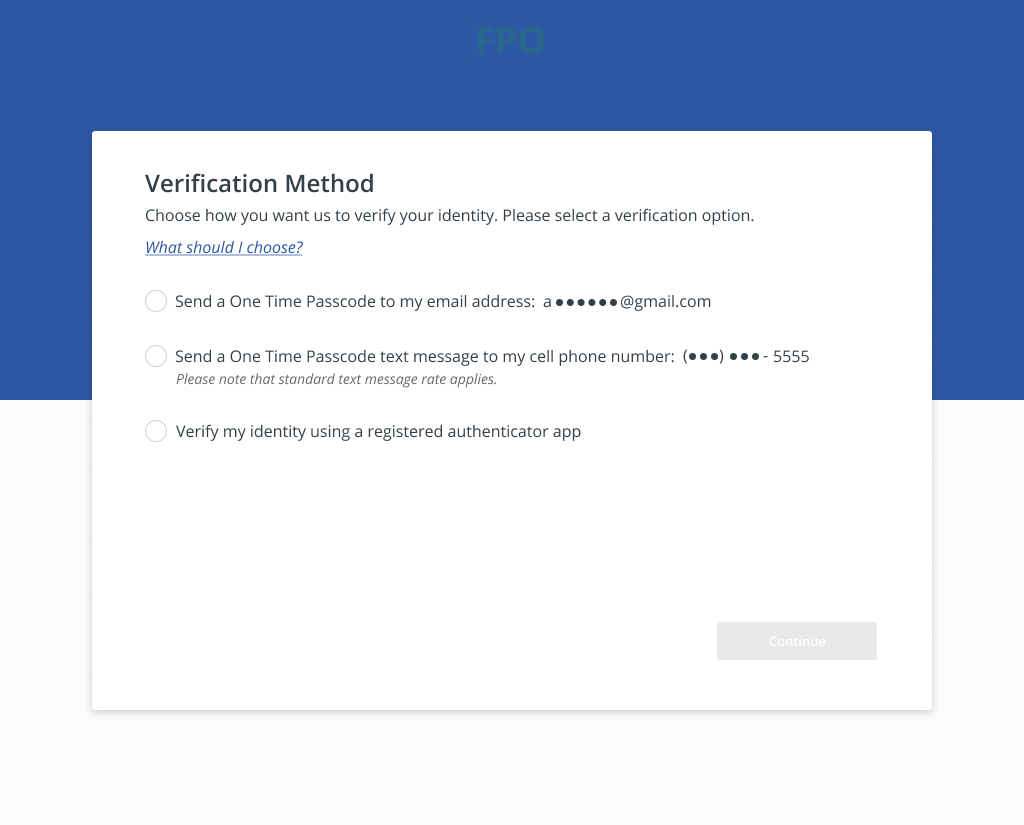
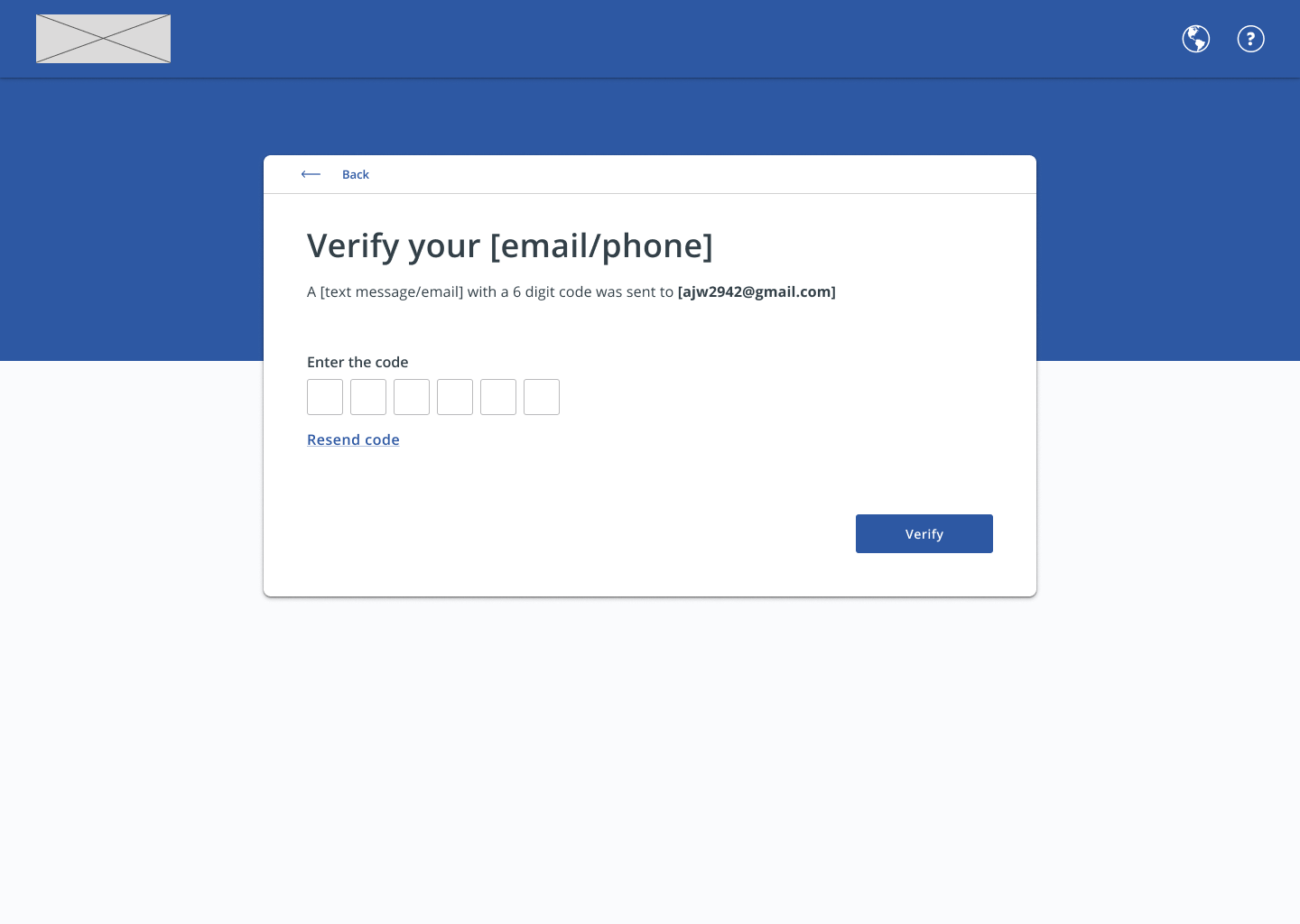
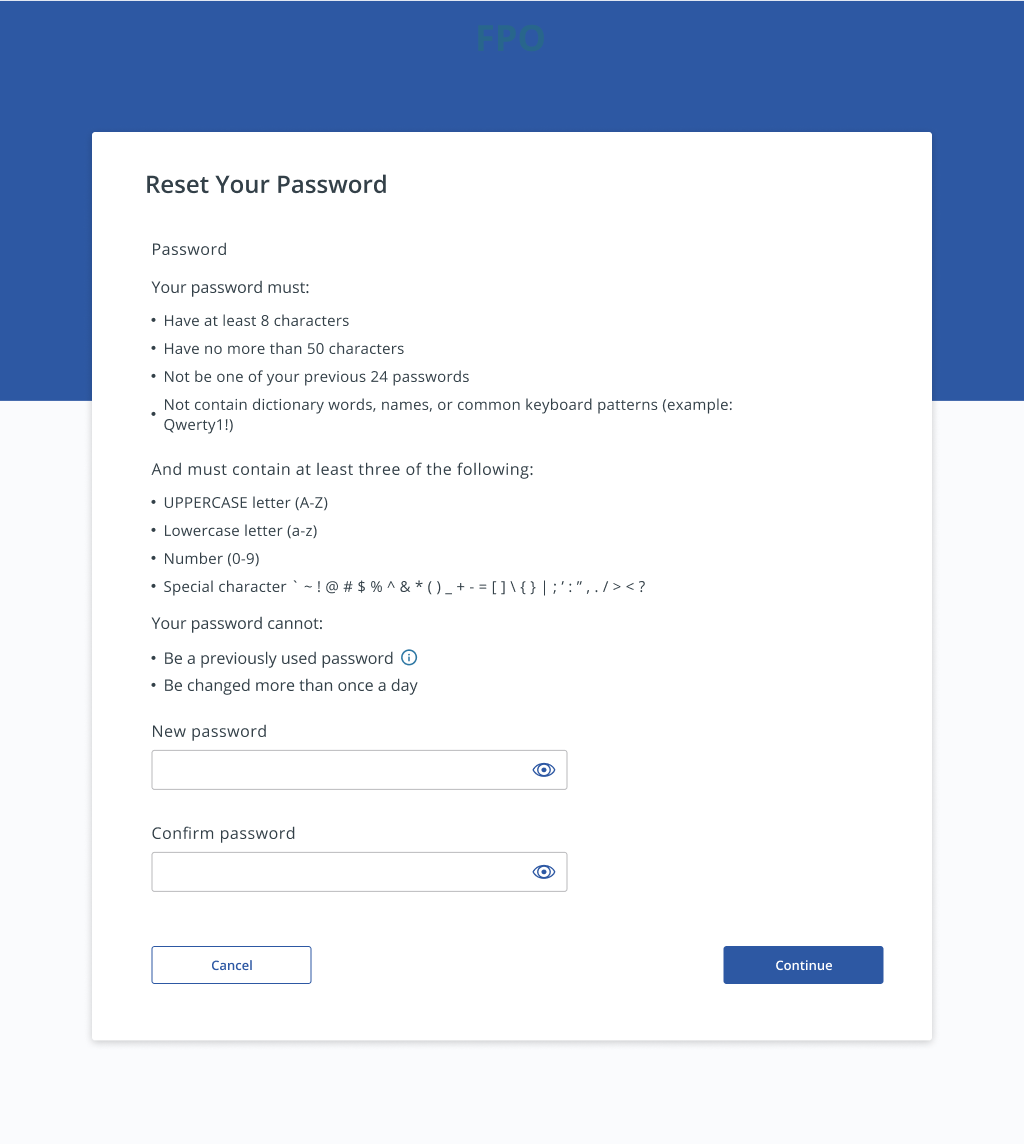
Infrequent logins combined with weak account recovery flows led consumers to create new accounts rather than recover existing ones , a pattern the UI inadvertently encouraged.
Report-a-Change (RAC)
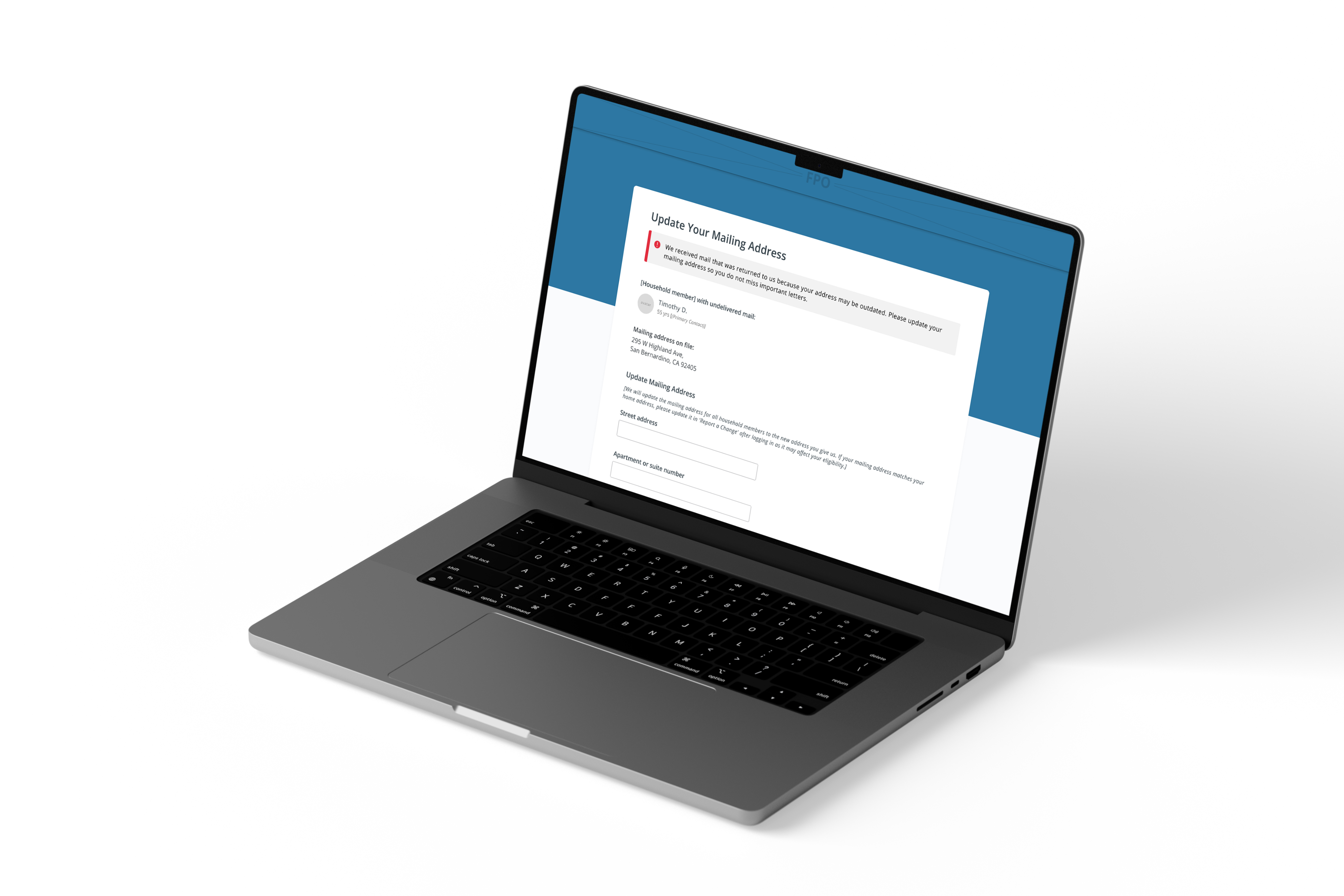
Confusing RAC experiences prompted consumers and agents to start new cases instead of updating existing ones , compounding the duplication problem at scale.
94% of overlapping enrollments were being created by agents and consumers through these four specific flows.
, Key finding, Decreasing Duplicates Research Synthesis
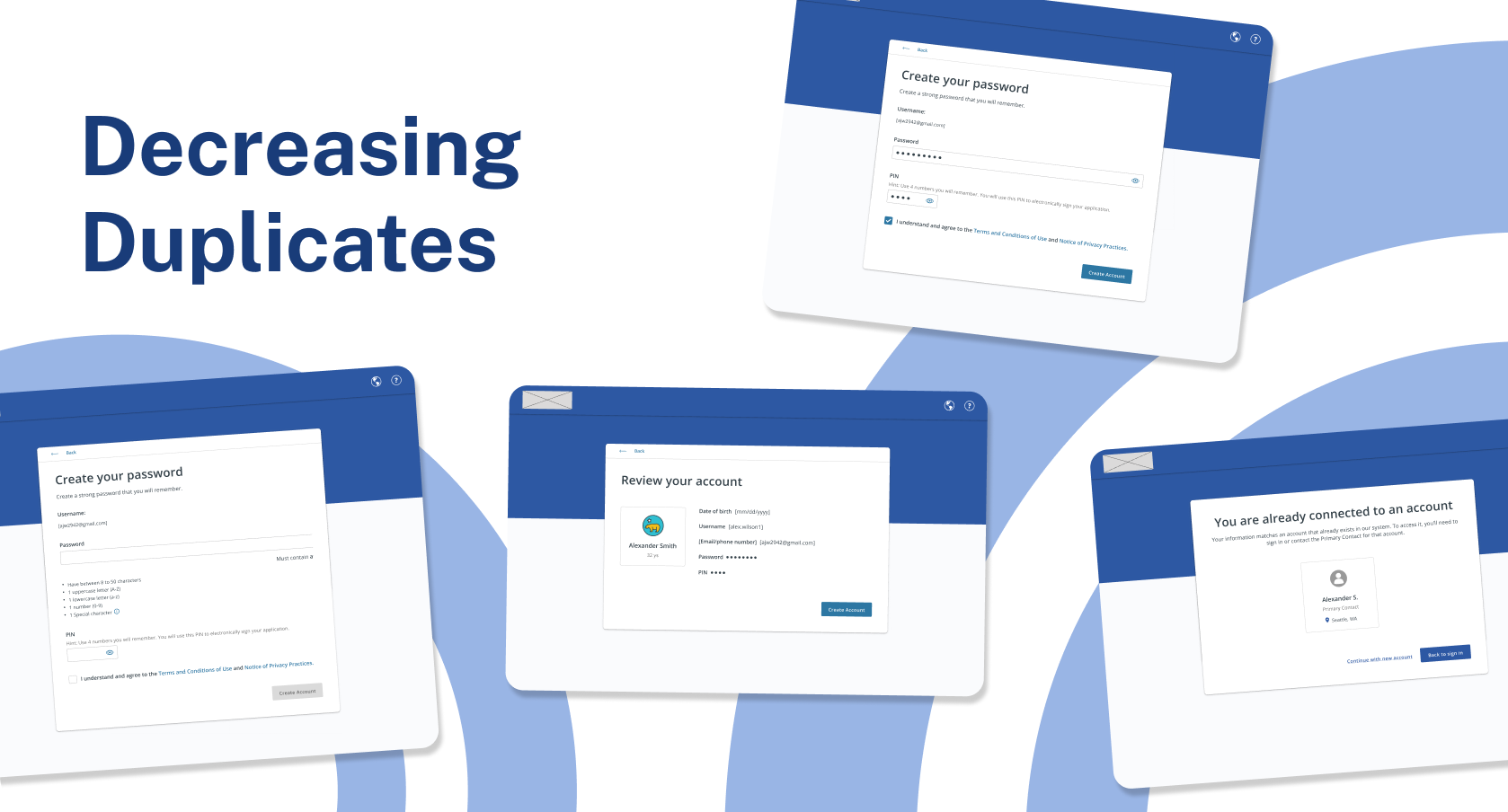
Before
After
Before
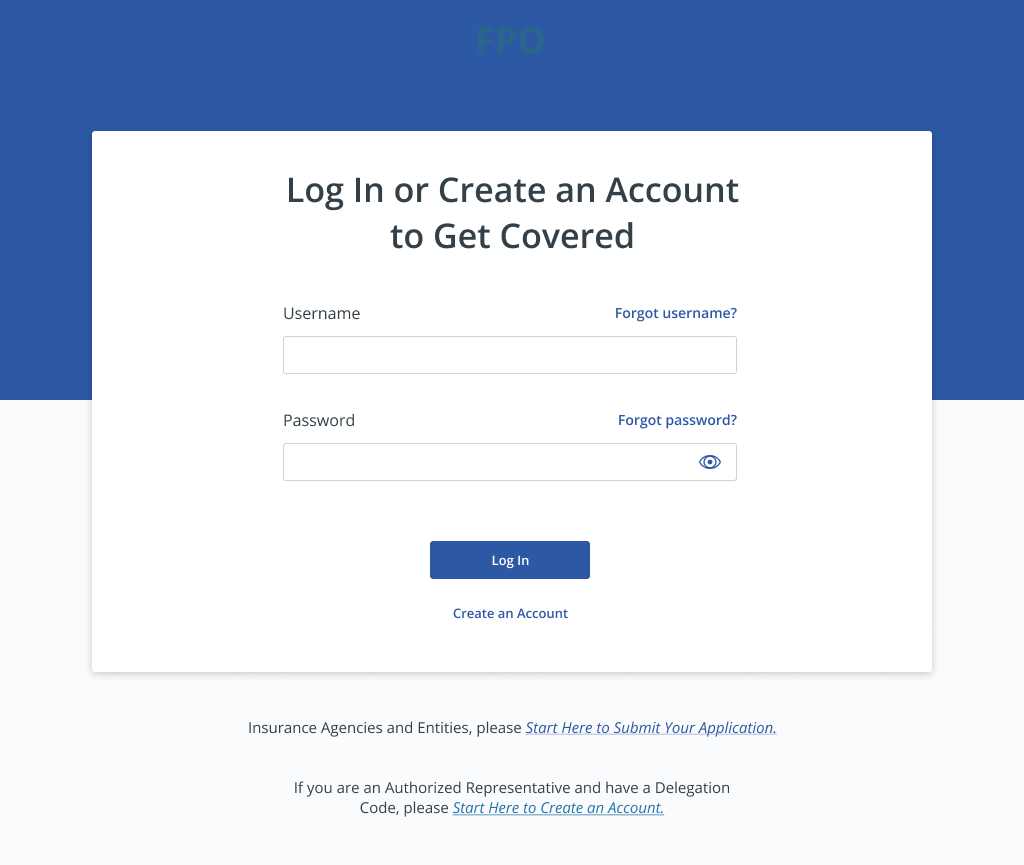
After
Before
After
Before
After
Before
After
Two CRs prioritized and currently in active implementation for 2025
Projected 30% reduction in duplicate records from workshop-driven changes
Cross-functional alignment achieved across design, engineering, and client stakeholders
Affinity mapping and research synthesis artifacts shared with client as strategic reference
Compliance & Inclusion
Accessibility as a Design Principle
ADA compliance on this engagement isn't a checklist , it's a design constraint that shapes every decision from the first wireframe to the final handoff document.
Systematically embedded keyboard and screen reader compatibility into every flow , not as a post-delivery audit, but as a requirement considered from the first wireframe.
Designed and documented masking patterns for seven types of sensitive data, ensuring privacy compliance without degrading usability or creating unnecessary friction for users.
Created annotated ADA compliance documentation as a standard part of every design handoff , including focus states, ARIA labels, interaction specs, and error handling patterns.
Applied accessibility thinking at the interaction level , focus management, error messaging, form validation patterns, and tab order , not just visual color contrast ratios.
Looking Back
Outcomes & Reflection
What I'd do differently
Lead with constraints from day one
My initial documentation proposal was more ambitious than what the team and client could adopt within existing contractual obligations. I'd lead with the constraints earlier , understanding the boundaries of what's changeable before proposing the ideal state. I'd also co-design the solution from the start rather than presenting a complete proposal for review.
What this taught me
Precision is care
Designing for a government platform at this scale means every decision has downstream consequences for real people's access to healthcare. That responsibility has made me a more precise, more empathetic, and more systems-oriented designer. I no longer think of compliance as a constraint on design , I think of it as design.
Get in Touch
Let's Connect
I'm always open to thoughtful conversations about design, collaboration, or new opportunities. The best way to reach me is email , I actually read it.